
Contents
When to plant plum trees
Spring, before bud break, is the best time to plant bare-root plum trees without containers. On average, this is mid-April. Night air temperatures should reach at least +5 °C.
Planting bare-root plum trees in autumn is not recommended. Due to their biological characteristics, plum trees experience difficulties during winter. The exception is plum saplings with roots in containers – when planted in autumn (at the end of September), they usually survive the winter quite successfully. If the soil on the plot is very wet, autumn planting should be avoided and postponed until spring.
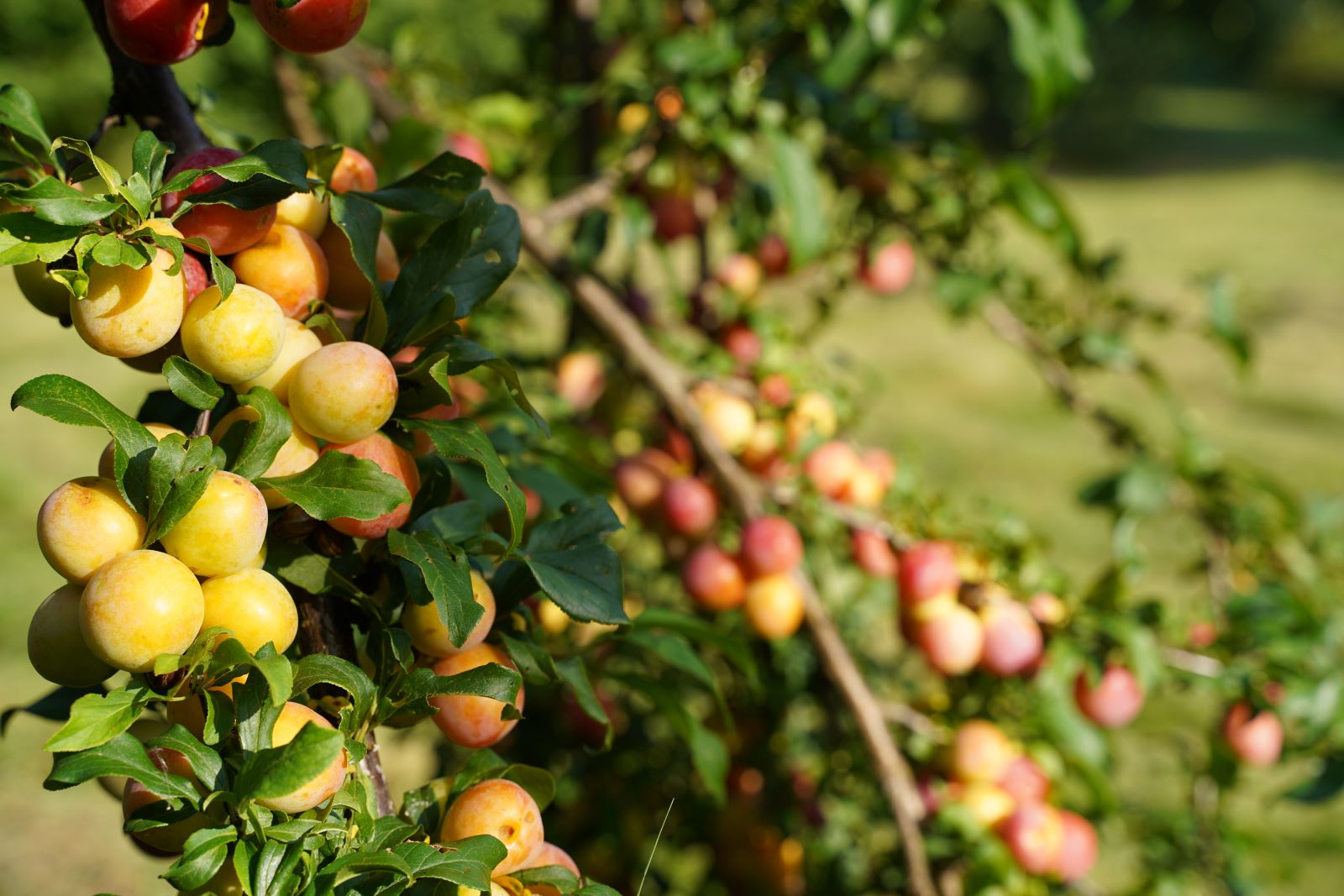
Soil for plum trees
Suitable soil types for plum trees: medium loam, moderately heavy soil, calcium-rich soil, loose neutral peat soil, fertile soil.
Unsuitable soil: acidic, very wet soil and soil where groundwater is very close to the surface (less than 1.5 m below ground level).
Favorable soil acidity for plum trees: pH 5.5–7.5.
An ideal location for growing plum trees is sunny, well-lit, protected from drafts, and open to the south or west side.
Northern, windy, low-lying, swampy, and shaded locations are unsuitable.
Plum trees should not be planted very close to tall trees, birches, cherries, and other fruit trees, because their biological compatibility is poor. Exceptions are apple trees, raspberries, and currants – plum trees coexist successfully with them.
Preparation of plum saplings
For spring planting, plum saplings no older than 2 years are selected, because older saplings adapt more slowly to new soil conditions.
The appropriate height of a plum sapling is up to 1–1.5 m. Taller or shorter saplings are unsuitable, because this may indicate excessive nitrogen fertilization.
The root system of a plum sapling should have one main root and many lateral roots (approximately 20–25 cm long). The roots must not be dried out and should remain moist.
Dried, rotting, and damaged roots should be removed. When cutting them, it is important that the cut edges are smooth and without wounds. The trunk of the plum sapling and the grafting point must be healthy, without damage or burn marks.
Selected plum saplings must be in a dormant vegetative state, with buds not yet burst and leaves not yet emerged. Plum saplings with excessively dry roots may be soaked in a bucket of water for 12–24 hours before planting, or dipped into a clay slurry. Saplings whose vegetative period has not yet ended are unsuitable for autumn planting.
Preparing planting holes for plum trees
Planting holes are prepared 1–2 weeks before planting. During this time, the soil in the holes will settle properly.
The recommended hole dimensions for plum saplings are: diameter – 0.7–1 m, depth – 60–80 cm.
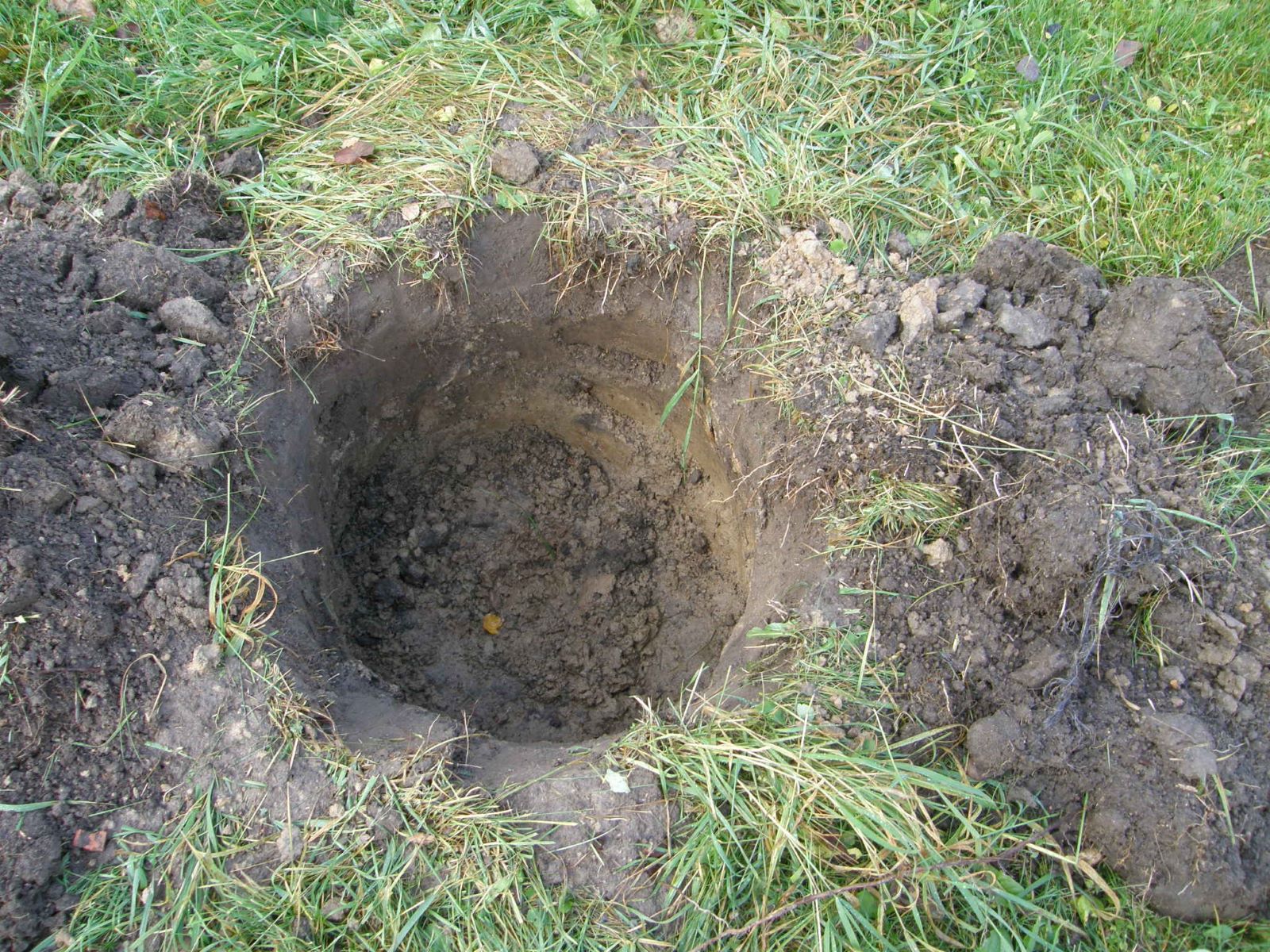
If several plum trees are planned in rows, the holes should be dug 3 m apart from each other. A distance of 3 m should also be maintained between the rows.
The hole should be filled with an enriched mixture of fertile soil and organic fertilizers. The use of mineral fertilizers, especially nitrogen fertilizers, in the planting hole mixture is not recommended.
Composition of the organic mixture: garden soil, 10 kg of compost or 10 kg of neutral peat, 500 g of dolomite lime or 200–300 g of wood ash.
A fertile top layer of sod soil may first be placed at the bottom of the hole.
A stake is driven into the northern side of the hole, and the hole is filled with the fertile soil mixture. The stake will help the sapling and its roots withstand wind gusts once the leaves begin to grow.
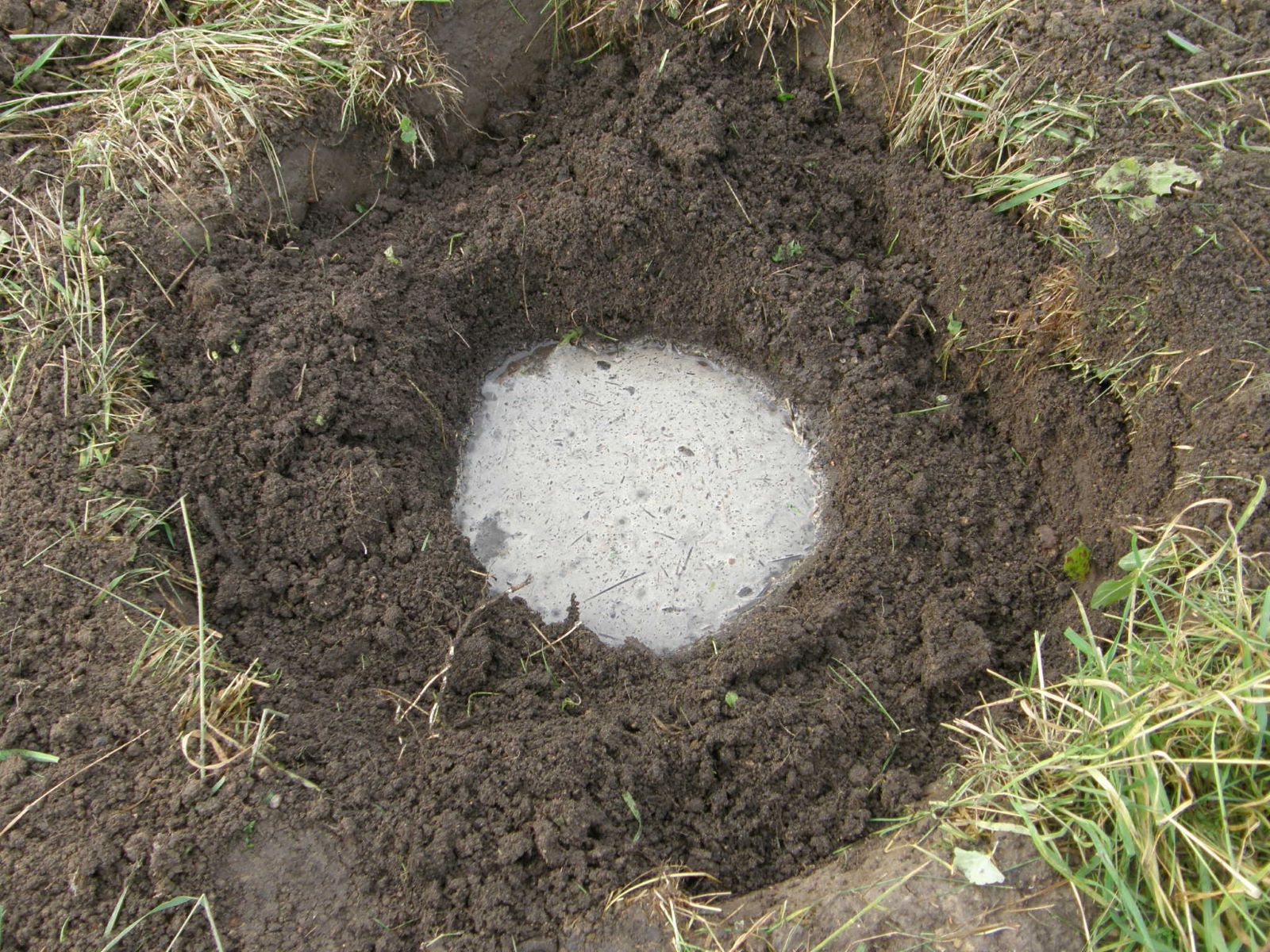
The soil mixture in the hole is moistened with water (10 liters).
Planting plum trees
In the moist soil mixture inside the hole, a smaller hole is dug for the roots of the plum sapling.
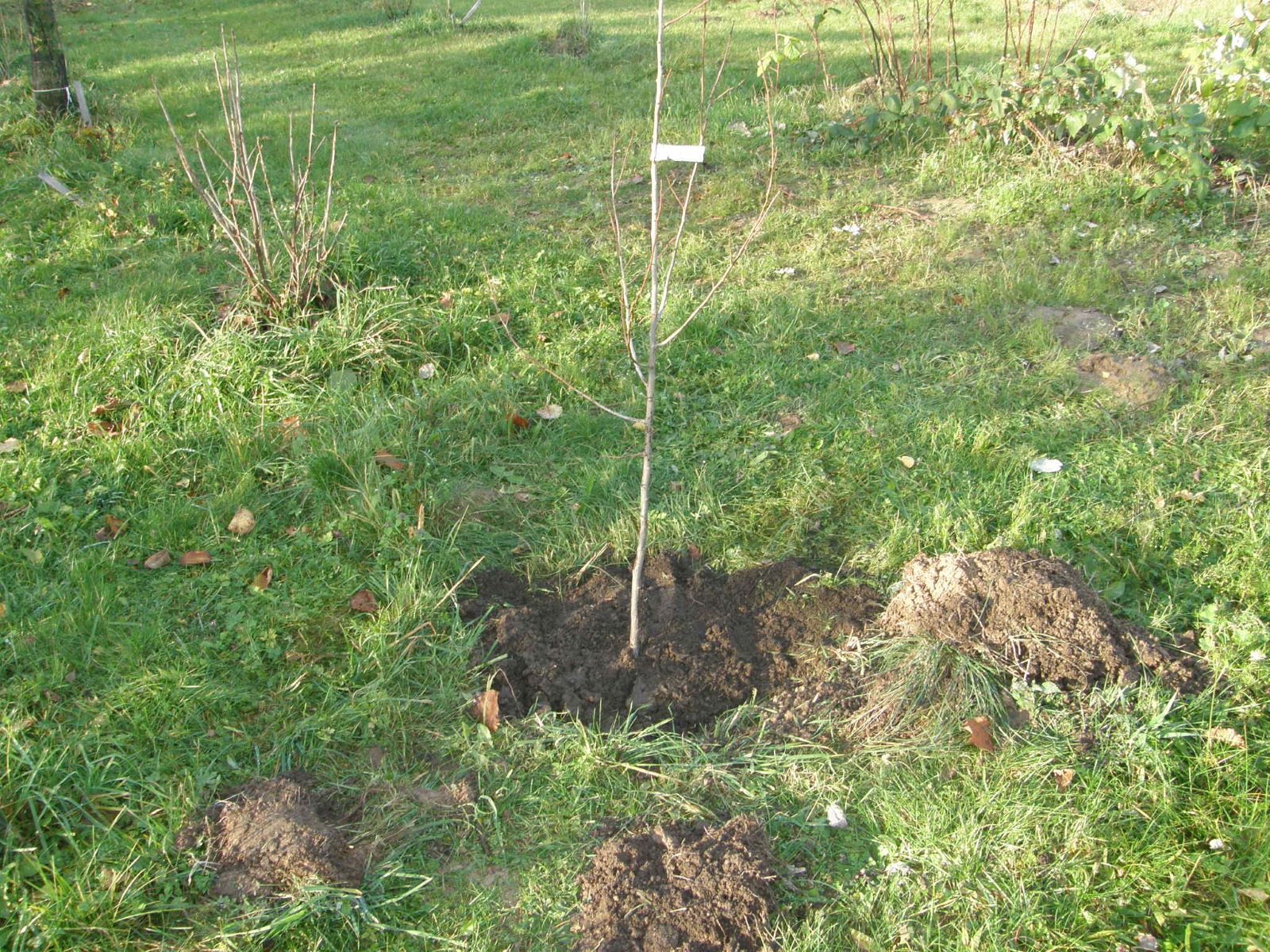
The plum sapling is held upright, and its roots are evenly spread inside the hole so that they do not become tangled or bend upward.
The roots are evenly covered with a layer of soil mixture so that the root collar remains level with the soil surface. No empty air pockets should remain between the roots. The graft union of the sapling should remain approximately 5–10 cm above ground level.
Freshly planted trees are watered immediately – 20–30 liters for each plum sapling. The soil around the sapling is mulched with peat or humus. The sapling trunk is tied to the stake.
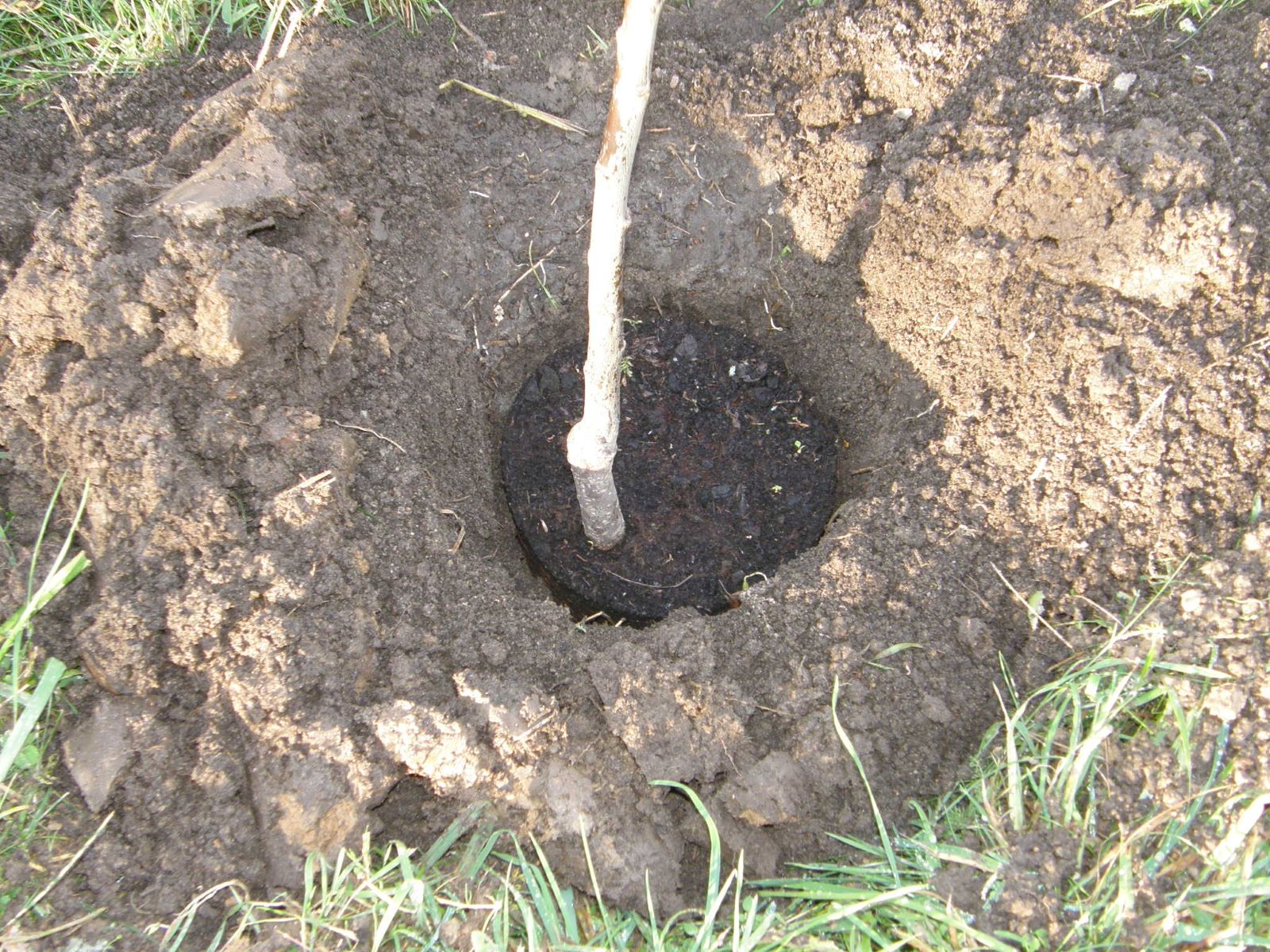
In autumn, plum saplings are planted with roots in containers.
When planting in autumn, mulching the soil around the planted plum sapling is especially important for helping the still weak plant survive its first winter. Suitable mulch materials include sawdust, peat, straw, and fallen leaves.
When to prune plum trees
The best time for pruning plum trees is March–April–May. Pruning is recommended in dry weather, avoiding moisture and using only sterile tools, because diseases spread freely in damp wood.
For newly planted plum saplings, the top is cut back in spring at a height of 60–70 cm. The cut is made above a healthy bud.
If the sapling already has side shoots, they may be shortened, leaving 2 buds on each shoot.
How to prune plum trees further
In all following years, damaged branches and shoots growing from below ground level, which take moisture away from the roots, are removed in spring.
At the beginning of summer, the main branches are pruned by removing unpromising shoots (those growing in the wrong direction, at sharp angles, or crossing each other).
At the same time, the following “incorrect” branches are removed:
branches growing vertically,
branches growing from the main branches at a sharp angle,
branches growing too densely (closer than 60–80 cm from each other),
crossing neighboring branches,
branches growing inward into the crown.
It is important that all removed branches are thinner than 2.5 cm. Crossing branches should be pruned away.
In autumn, plum trees are best pruned in late October or November. If pruned earlier, unnecessary water sprouts may regrow and weaken the tree.
Watering plum trees
Of all fruit trees, plum trees are among the most demanding in terms of moisture.
During the first year, plum saplings are usually watered abundantly, while mulching a 0.5 m wide area around the trunk. The watering rate is 50–60 liters for each young sapling.
For mature fruit-bearing plum trees, the watering rate reaches up to 80 liters per tree.
The exact amount of water depends on the area beneath the plum tree canopy. Calculate how many square meters are covered by the circle beneath the outer edge of the canopy around the entire tree. Multiply this number by 3. This is the number of buckets of water needed for watering one plum tree.
Plum trees are watered 4–5 times during the summer:
during fruit set formation,
a second time 2–3 weeks after the first watering,
during fruit ripening (2–3 weeks after the second watering),
after harvest.
When watering plum trees, the soil should be moistened to a depth of 40–50 cm.
Watering should not be done directly next to the trunk. It is better to dig a groove directly under the outer edge of the canopy (20–30 cm deep).
The wider the plum tree canopy, the more grooves should be dug around it. On average, 3–4 grooves about 12 cm deep are sufficient. For a young tree, 1 groove is enough. The grooves help retain moisture in the soil after watering.
Soil structure is also important. Sandy and sandy loam soils should be watered more often. Heavy and clay soils should be watered less frequently, but more abundantly.
After harvesting, plum trees are watered for the last time during the summer. Do not water plum trees immediately before harvest.
Fertilizing plum trees
During the first growing season, it is recommended not to fertilize plum saplings.
During the second season, plum trees are fertilized in June using nitrogen fertilizers. The nitrogen rate is 40–50 g for each plum tree.
Plum saplings planted in autumn rather than spring may only be fertilized with phosphorus fertilizers, which stimulate root system development. Nitrogen fertilizers and fresh manure should be avoided.
An excess of nitrogen fertilizers may harm autumn-planted plum saplings during autumn and winter, because the vegetation period may restart and the plants may fail to prepare properly for winter.
Fresh manure is harmful to autumn-planted plum saplings because direct contact with the roots may cause root rot and the death of the entire plant. Only well-rotted manure is suitable.
Plum trees planted in spring, until they reach fruit-bearing age, are fertilized in June using equal proportions of phosphorus, potassium, and nitrogen. In August, nitrogen is no longer used – only phosphorus and potassium.
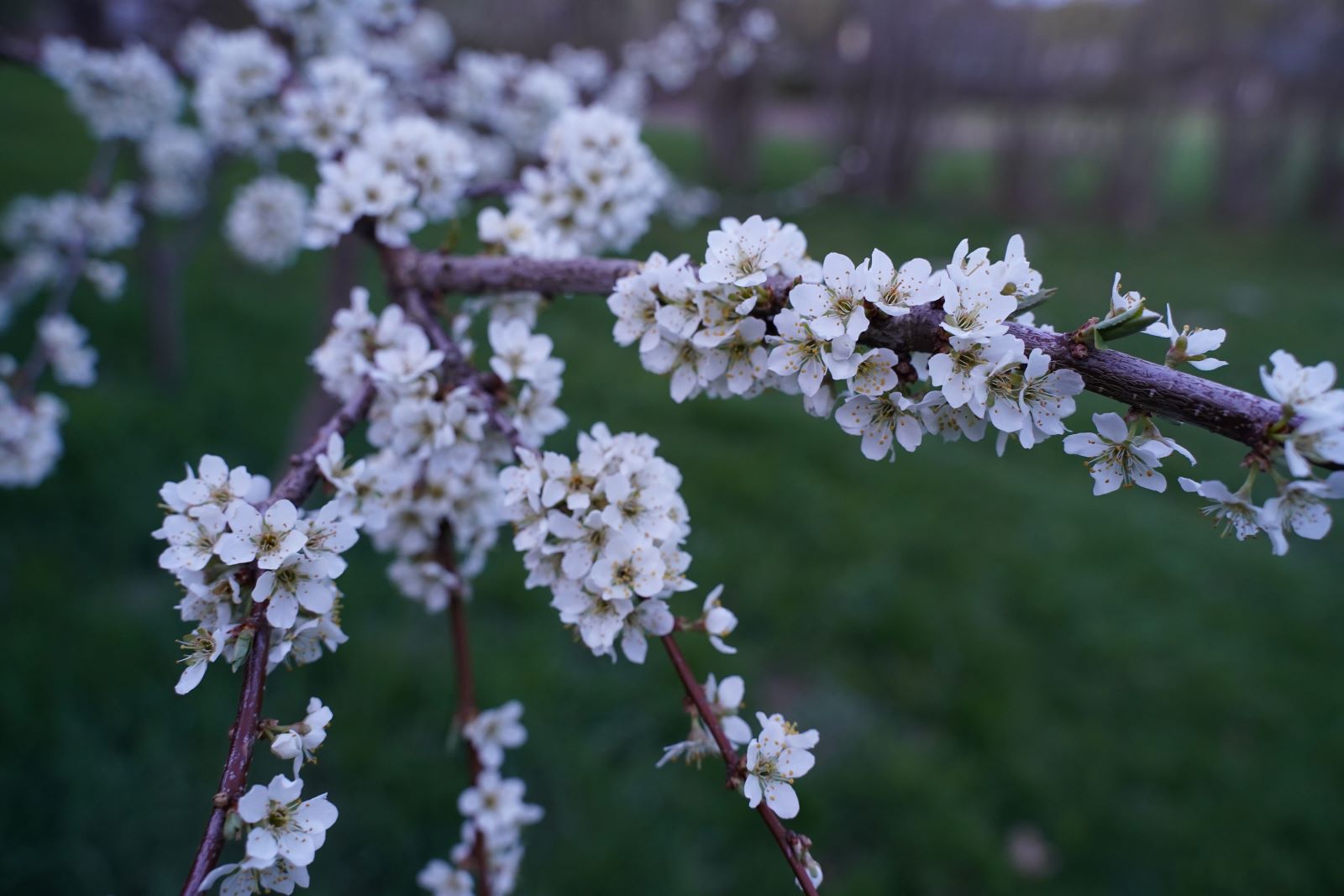
Plum trees that have reached fruit-bearing age are fertilized with nitrogen before flowering begins (May–June). The recommended rate is 50–60 g per tree. During the same summer, they are fertilized again at the beginning of fruiting using equal portions of nitrogen, phosphorus, and potassium (50–60 g each). Fertilization is completed after harvest using only phosphorus and potassium.
Plum trees benefit from annual fertilization with 200 g of wood ash.
Mature 3–4 year-old plum trees are fertilized in autumn, after the end of the vegetation period, using only potassium and phosphorus.
Harvesting plums
August and September are the best months for harvesting plums. Plum harvesting has its own specific features. These recommendations will help harvest the crop correctly and at the right time without damaging the fruit or the tree, and will help keep plums fresh for as long as possible without spoilage.
Harvest plums only in dry weather. Do not rush to harvest immediately after rain or watering, and do not harvest in the morning while dew is still present on the fruit.
It has been observed that dry plums store significantly longer than wet ones. Firm plums are better. Harvest plums as soon as they are fully formed and still firm. Do not wait until the plums become soft on the branches. Ripening occurs gradually, therefore plums should be harvested selectively in several stages in order to avoid fruit drop. Only healthy and undamaged plums should be harvested for storage.
Plums should be harvested only after they develop their characteristic color. There should be no green spots remaining.
Plums intended for long-term storage should be harvested together with the stems, or the stems should be cut halfway with scissors. The fruit should then be placed immediately into storage containers.
The less the fruit itself is touched, the better the so-called “wax” layer remains preserved, protecting the plum from adverse effects. To avoid damaging the fruit, harvesting should always follow a specific direction: from bottom to top, and from branch tips toward the trunk.
Start harvesting from the tips of the lower branches, move toward the trunk, and gradually continue upward to the upper branches.
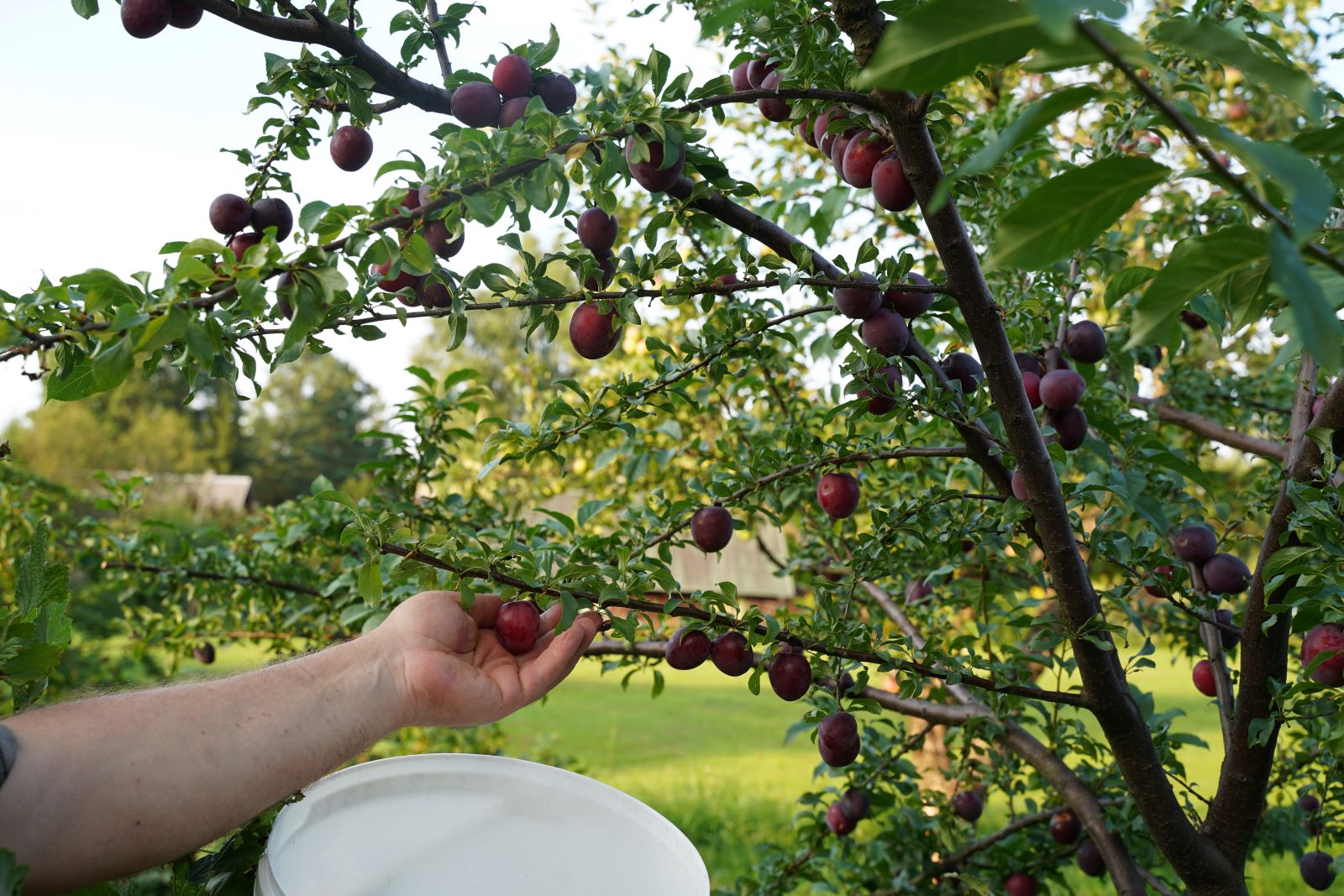
For harvesting in the upper part of the tree, use a ladder or a fruit picker with a long handle. Do not stand on the branches or bend them excessively, because plum wood is very fragile.
Shaking the tree is also not recommended if the plums are intended for long-term storage. Tree shaking is suitable only if the fallen plums will be consumed immediately.
Plum storage conditions and usage
Proper storage conditions will help preserve the plum harvest in the cellar for a longer period and prevent spoilage.
Line storage boxes with paper on the inside. Place only healthy and undamaged plums into them, holding the fruit by the stems in order not to rub off the “wax” layer.
The storage room temperature should be maintained constantly at 0–2 °C, while air humidity should remain around 85%. These conditions help plums preserve their beneficial and nutritional properties for a longer time. If plums are packed into airtight bags made of thin polyethylene film, they may be stored at 0 °C for up to 2 months.
Rejected plums unsuitable for storage should be consumed within several days or used for cooking (desserts and other dishes).
Plums on the same tree ripen unevenly: some ripen earlier, others later. Therefore, harvesting is carried out in 2–3 stages.
For compotes and jams, harvest slightly underripe plums.
For marmalade, fruit puree, and jam spreads, harvest fully ripe plums.
Plum tree diseases
Disease | Symptoms | Causes | Consequences |
|---|---|---|---|
Moniliosis | Browning and drying of leaves, flowers, and shoots in spring. Gray pustules on leaves and flowers. Brown rotting spots and brown pustules on fruits. Wounds on branch bark and gum exudation. | Damp, cold, and windy weather during flowering. Wounds on ripening and stored fruits. Fruit mummies not removed in time. Branch wounds not disinfected in time. Insects. | Fruit drying, deformation, and mummification. Fruit drop. Drying of twigs. |
Shot hole disease of plum | Light brown spots and holes in leaves. Reddish spots and wounds on shoots, gum exudation. Blackening of buds. Dark red spots and wounds on fruits. | High air humidity and rainy weather during leaf growth. Shoot wounds not disinfected in time and dried branches not removed. | Damaged plum fruits. Drying of branches. Reduced harvest. |
Brown rot | Brown rotting spots on fruits. Entire fruit turns brown with whitish mold growth. | Damp weather. Wounds on fruits. Contact between healthy and rotting fruits. Fruit mummies containing the pathogen not destroyed in time. | Fruit rot and mummification. Fruit drop. |
Silver leaf disease | Whitish silver sheen on leaves. Curled leaves. Drying branches. Wrinkling of trunk bark and fungal growth on bark. | Very dry air, lack of moisture in soil. Boron deficiency. Excess nitrogen. Pruning and grafting mistakes. Spider mites. | Failure of fruit formation. Exhaustion of the entire fruit tree. Loss of harvest. |
Plum pocket disease | Fruit deformation – elongation, thinning, wrinkling. Green flesh without a stone. | Excessively long or delayed flowering. Fungicides not applied in time. Boron deficiency. | Poor-quality harvest unsuitable for consumption. |
Plum tree pests
Pest | Causes | Damage |
|---|---|---|
Plum aphids, mealybugs | Tree bark not treated and cleaned in time. Insecticides not used in time. Weeds nearby. | Fruit and leaf drop. Leaf deformation, death of fruit set. Partial crop loss. |
Plum fruit moth | Warm weather at the end of June. Insecticides not used in time. | Underdeveloped fruits. Damage to fruit flesh. Death of fruit set. Fruit drop. |
Plum sawfly | Warm and humid weather. Excessively long flowering period. Reduced fruiting. Insecticides not used in time. | Damaged fruit ovaries. Damage to fruit flesh. Fruit drop. |
Cockchafer beetle | Orchard soil not dug over in time. Beetles not collected from leaves in time. Protective treatments not applied in time. | Damage to plum roots. Drying of the fruit tree. |