
Contents
Interior doors are an essential element of home interior and perform both aesthetic and practical functions. Interior doors decorate the room and act as a sound and visual barrier. Interior doors last ten or more years, they must remain fashionable and durable for a long time. Choosing doors is quite complicated, there are many design options, and the materials from which interior doors are made differ.
Best interior doors
Like many building materials, interior doors can be divided into economy, mid-range and premium classes. The differences between these classes are quite difficult to understand, because interior doors made from the same materials can differ significantly.
Premium class doors are most often solid wood interior doors, when the doors are made entirely from oak, ash, alder and other types of wood. Most often, solid wood doors are of classic design and are used in more luxurious interiors. Usually, solid wood is painted, the natural color can be left, or the surface is stained and varnished. Many people are attracted by the strength of solid wood doors and the beauty of natural wood.
Another type of doors – frame doors. The frame is perimeter-based and can be made from various materials. It can be solid wood, a combined frame of solid wood and MDF (medium-density fiberboard), or a frame made from particle board. The cheapest frame is made from particle board. MDF is a heavy board, but a combined solid wood and MDF frame is lighter and stable. A lighter frame means less load on hinges and a longer-lasting construction.
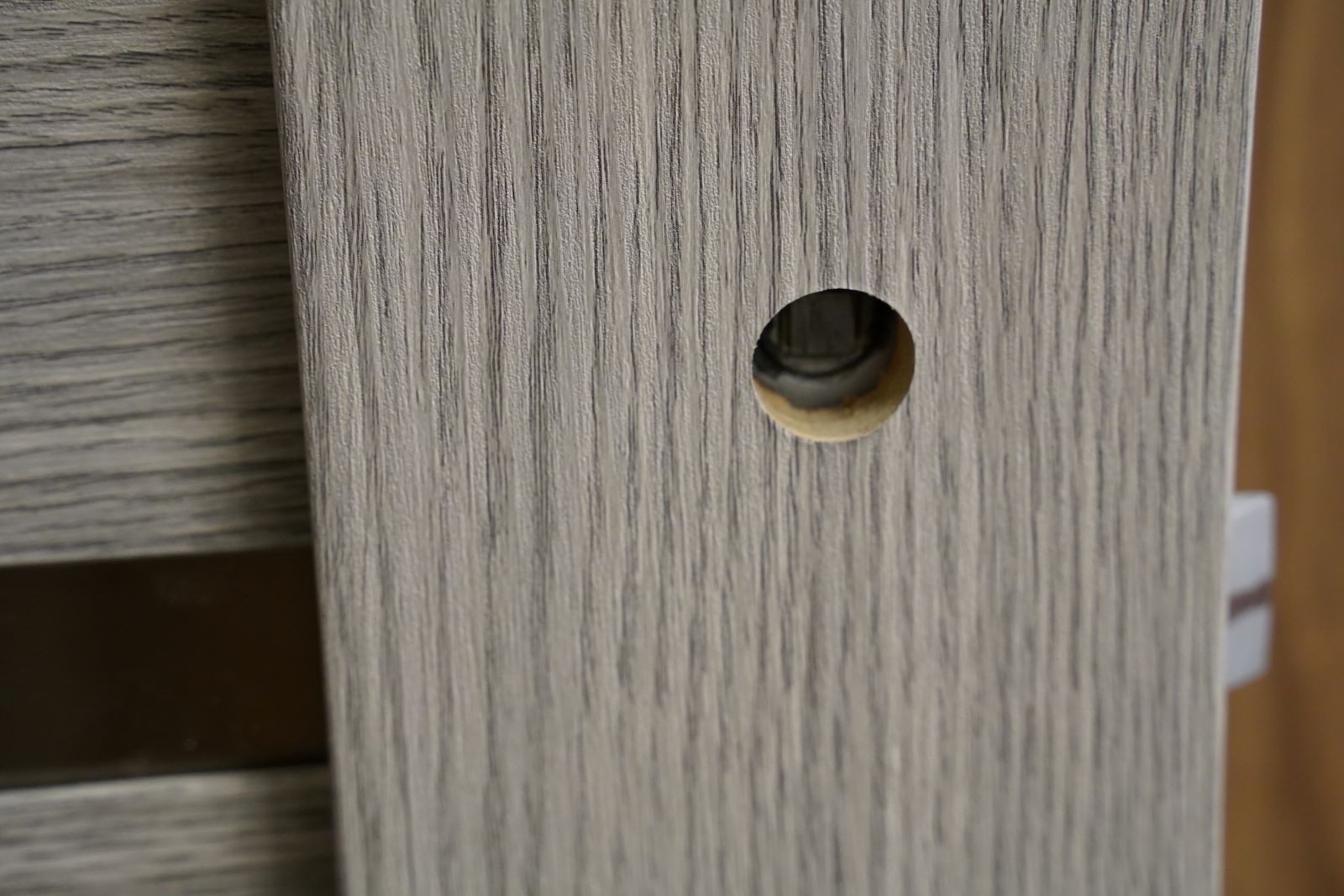
The door construction can be seen through the handle cut-out.
In flush doors (doors without internal panels), the space between the frame elements is usually filled with honeycomb or particle board (solid) fillings. The density of the filling determines the sound insulation properties of the doors.
Interior door design
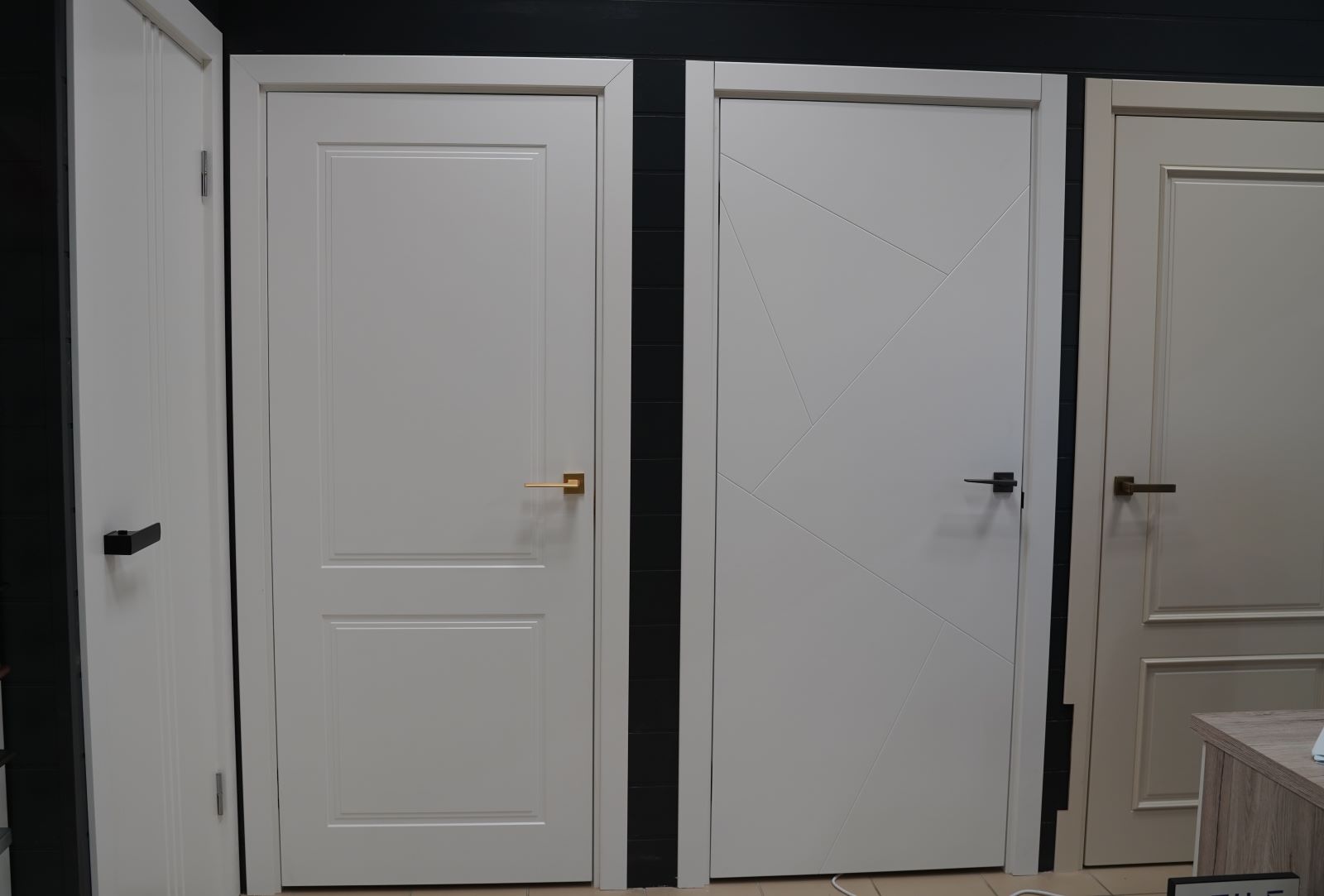
Interior doors are most often of classic design, which practically does not go out of style for decades, or may have features of modern design. Recently, white doors with modern classic milling have become popular.
Doors are coated in several ways and with several materials. The most popular today is eco-veneer coating. It is one or several films covering the surface of interior doors. Eco-veneer means not economy but ecology. Eco-veneer does not emit harmful substances into the environment and is resistant to scratching and ultraviolet rays. Eco-veneer interior doors have a wide variety of colors and patterns. There are also eco-veneer doors with textured embossed surfaces.
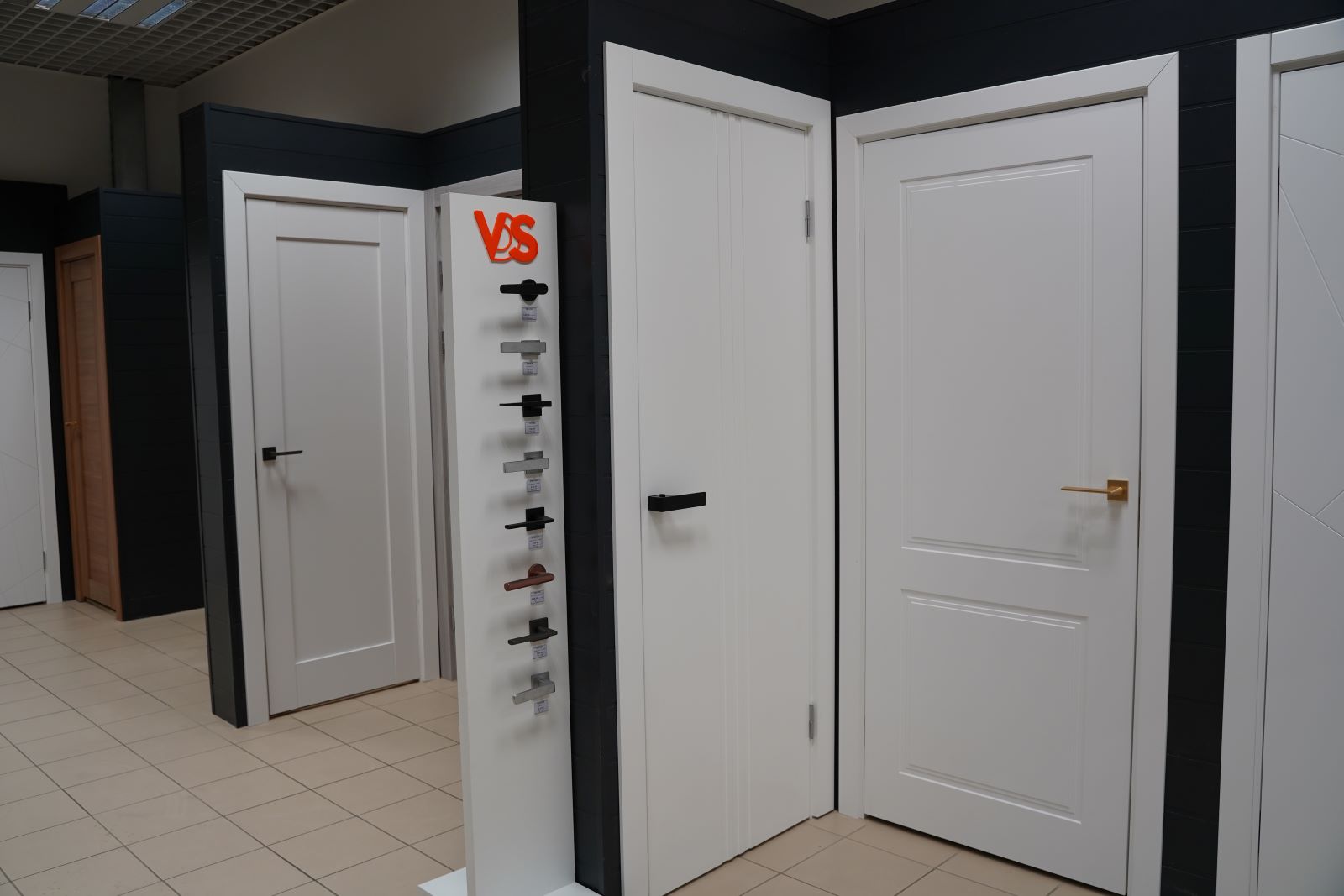
The surface of interior doors can be covered with natural veneer. A natural wood layer, most often oak, ash, or birch. The veneer surface can be milled, then stained, varnished, or painted.
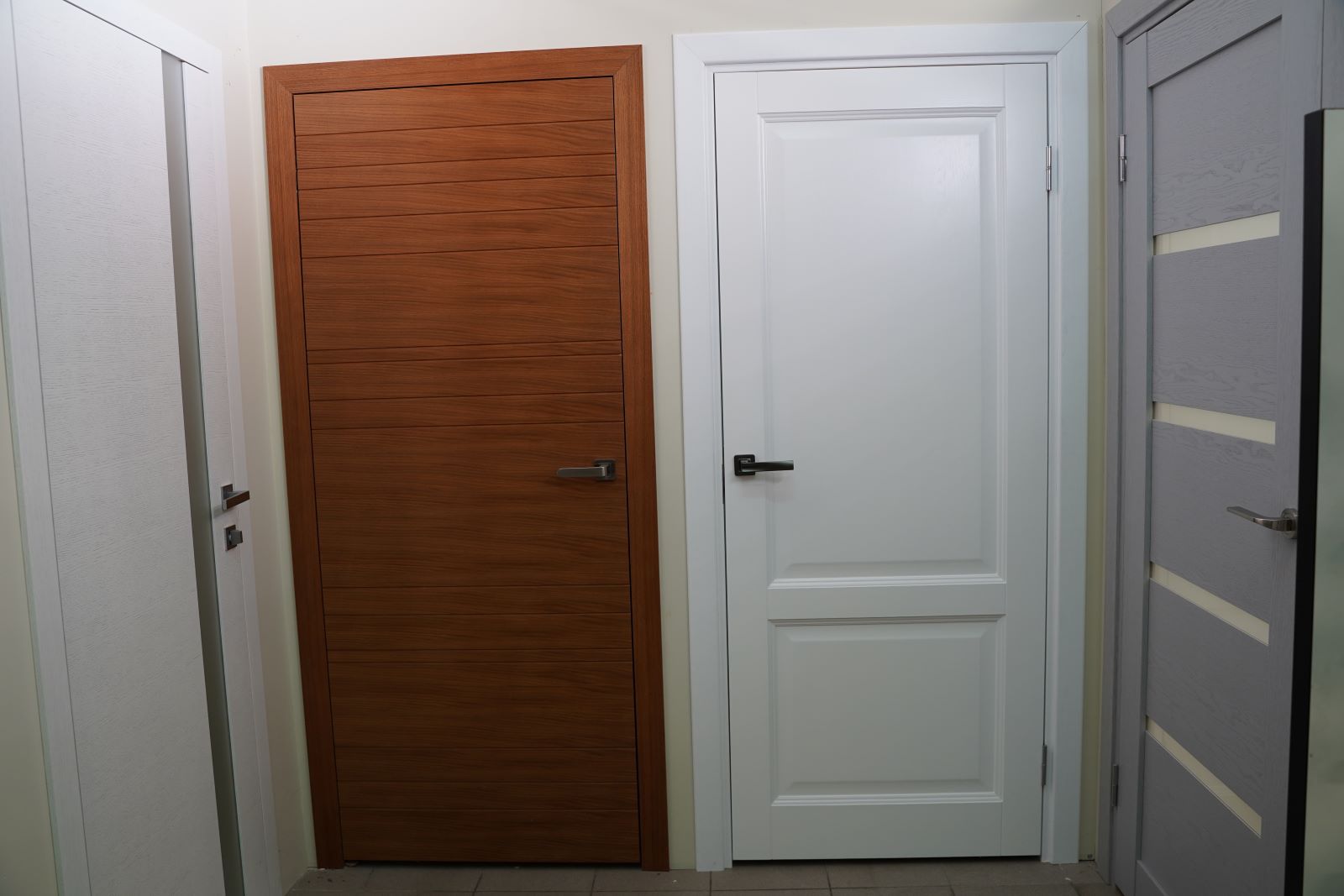
Natural veneer interior doors. On the left – stained doors, on the right – painted natural veneer doors.
Door milling is an important part of interior door design. Classic milling usually imitates panel design. Modern milling can be very diverse. Doors with glass are also popular.
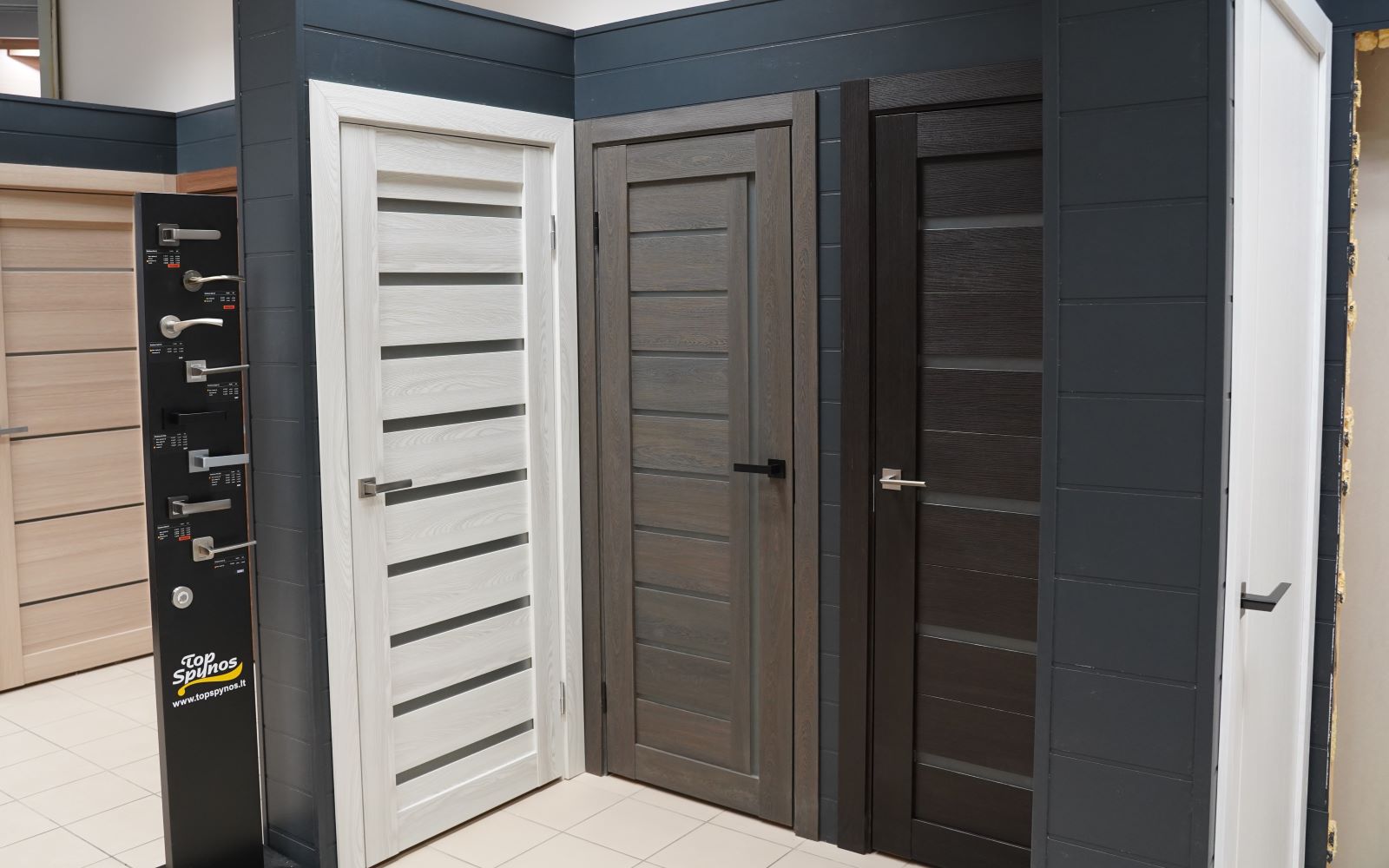
Glass is often used in interior door design. Glass inserts can be of various sizes and colors.
Modern design also includes so-called invisible doors. They are installed flush with the wall surface and are favored in modern and minimalist interiors.
Interior door handles are also an important design element. Door handles are usually matched with other interior elements, for example, furniture handles.
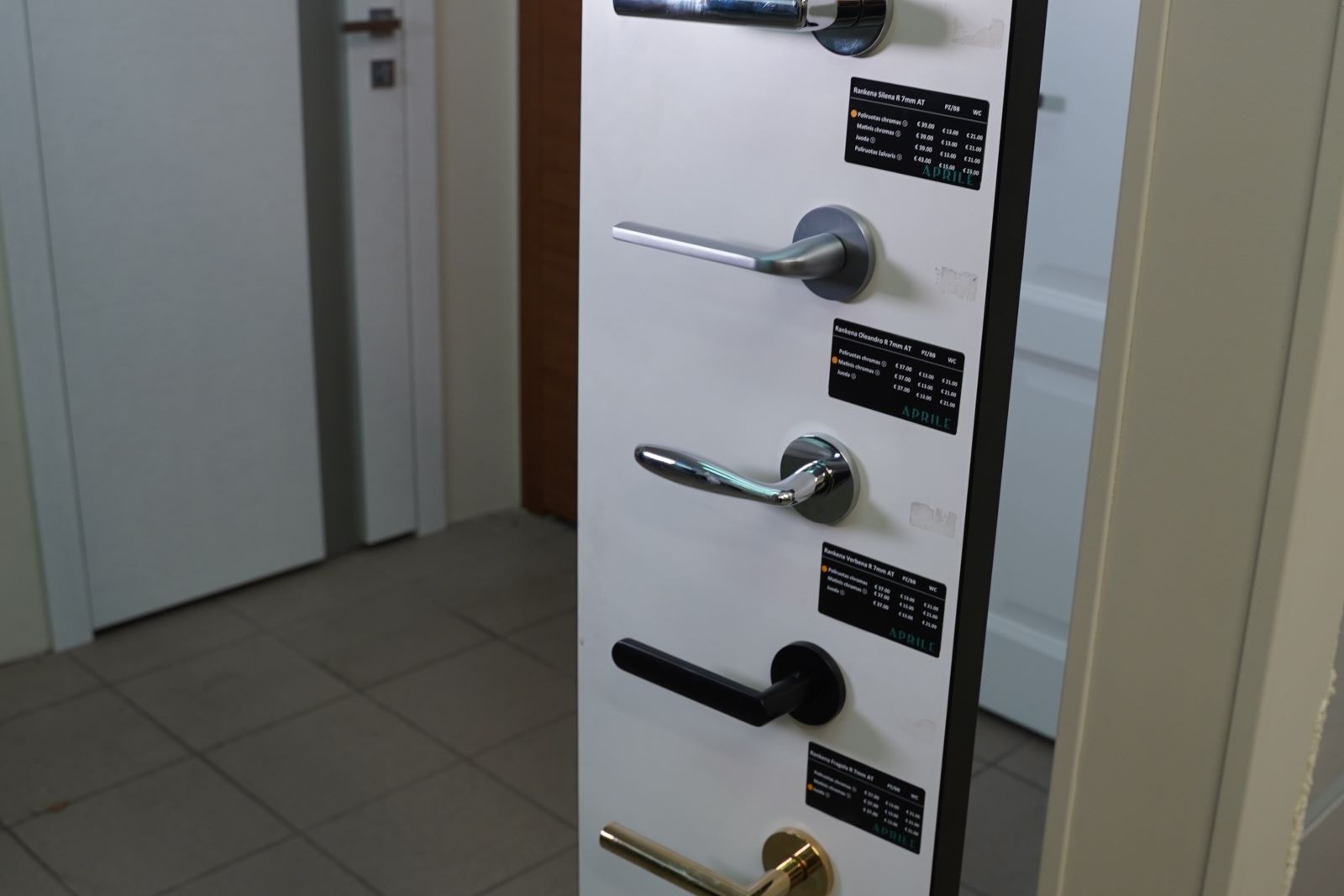
Manufacturers can offer a wide range of door handles.
Interior door improvements
Modern interior doors can have many different improvements that enhance functional and aesthetic properties. These include hidden hinges, various locks, and others.
Interior doors with hidden hinges are popular. And magnetic locks allow the doors to close very quietly.
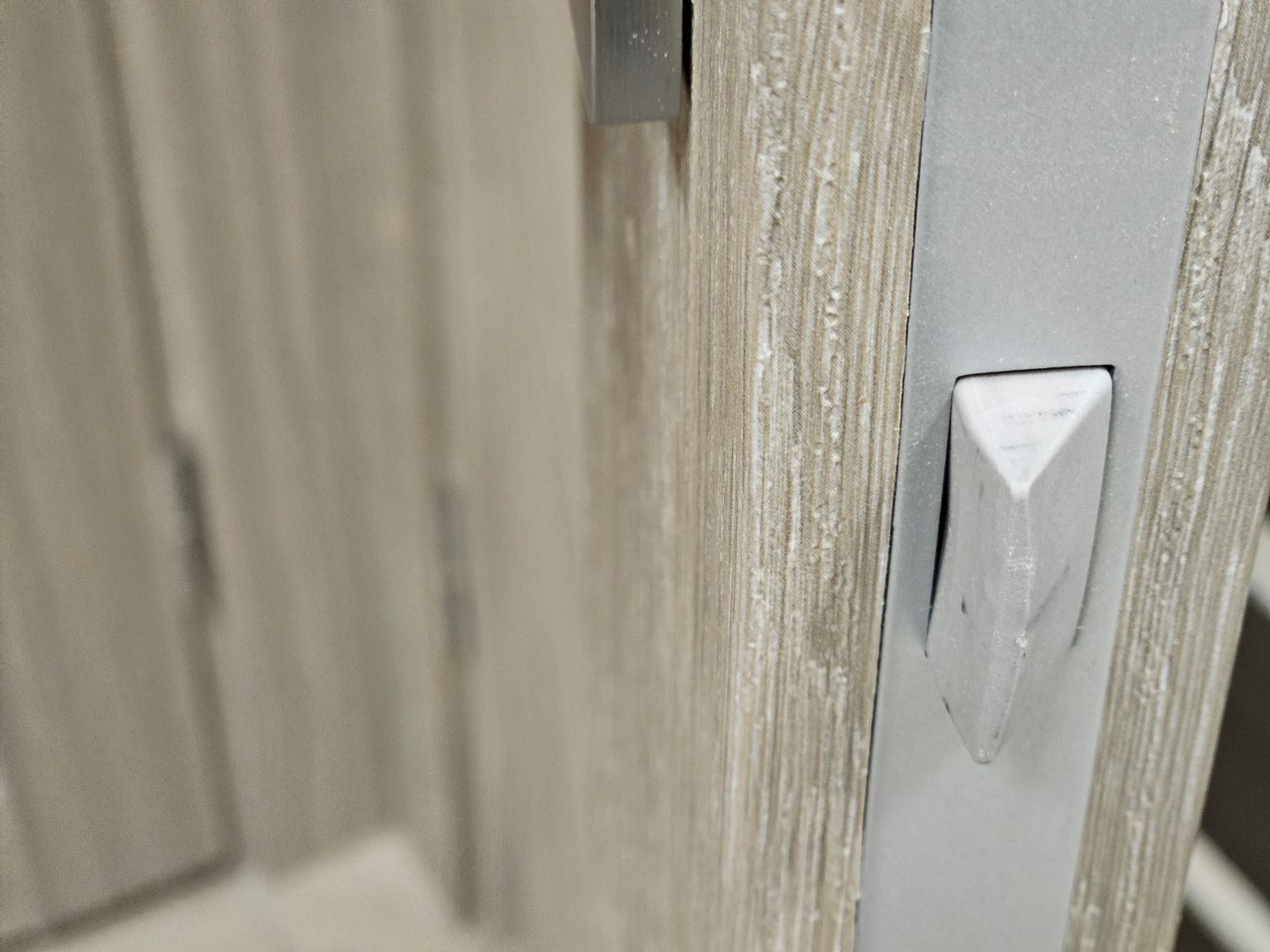
The soft-closing latch is curved and made of plastic.
Interior door installation
Interior doors are installed quite easily, and with at least some carpentry skills, it is possible to install them yourself. Installing door trims is somewhat more complicated, as it requires precise wood cutting tools.
Interior door dimensions can be standard and suitable for most openings. It is also possible to order non-standard doors for non-standard openings.
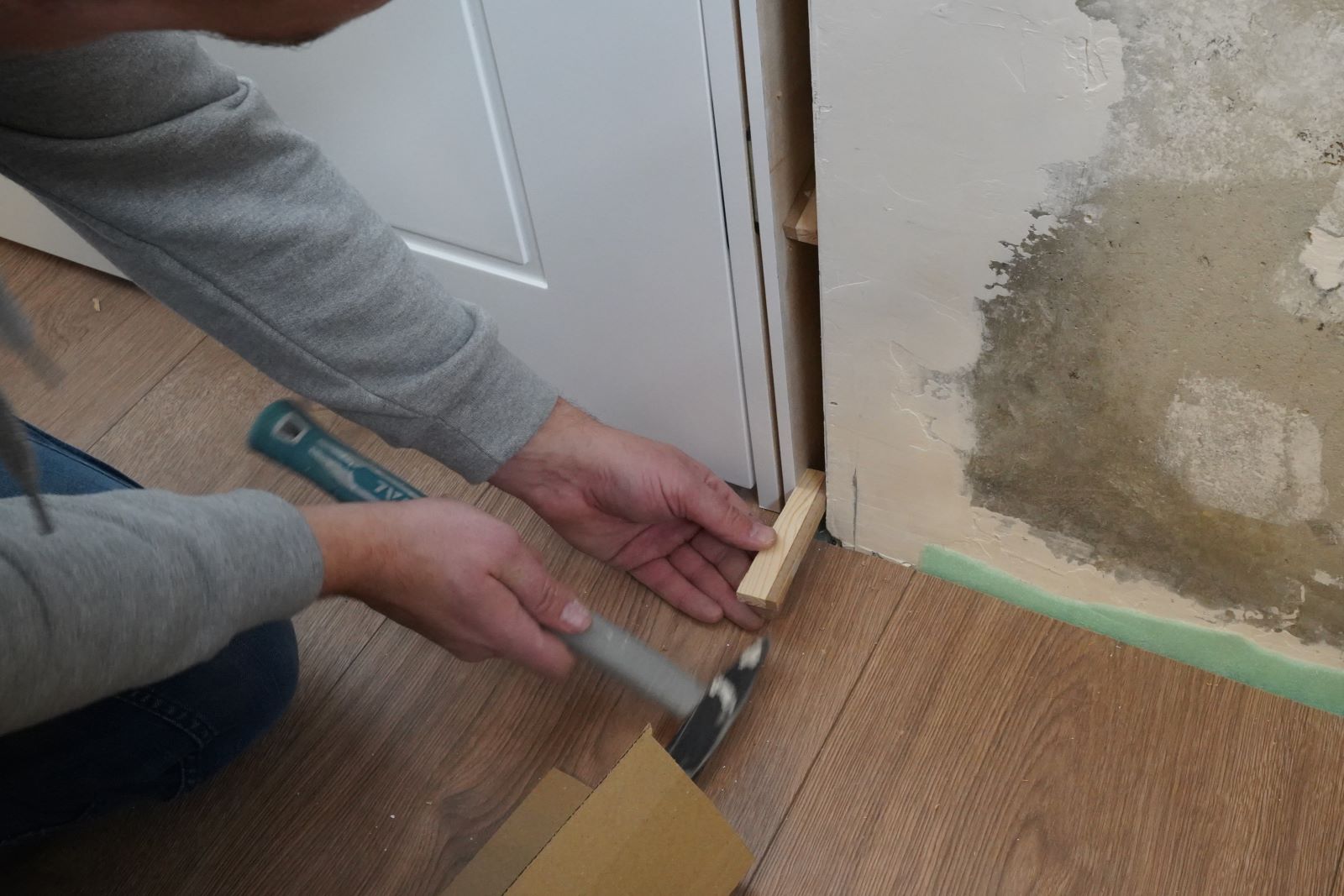
After placing the door frame, it is wedged. Wedges are inserted at the bottom and top. After the installation foam hardens, these wedges are removed. The most important wedge is near the lower hinge. The greatest load will be here, therefore this wedge is left.
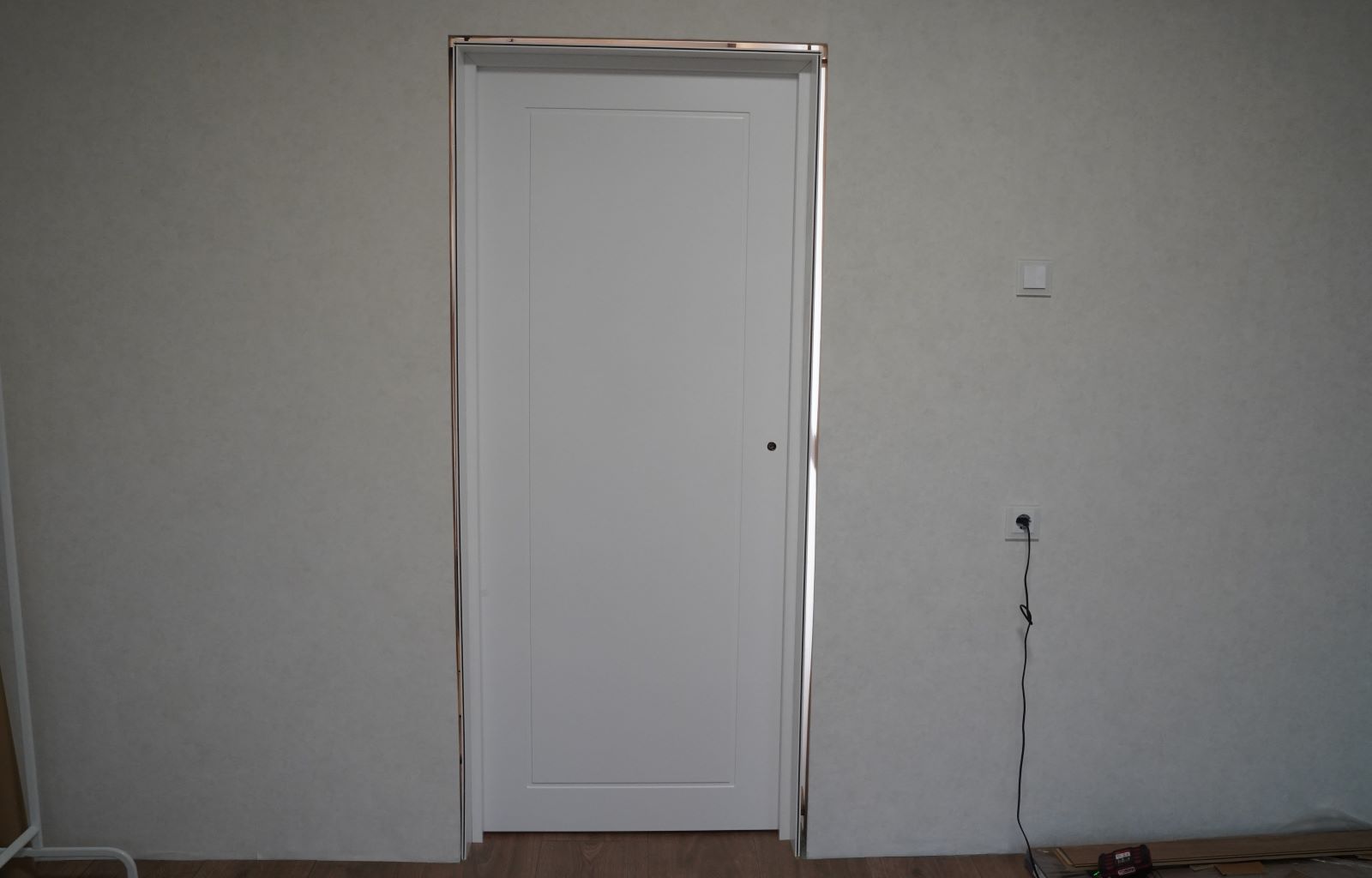
After wedging, the doors are aligned with a level.
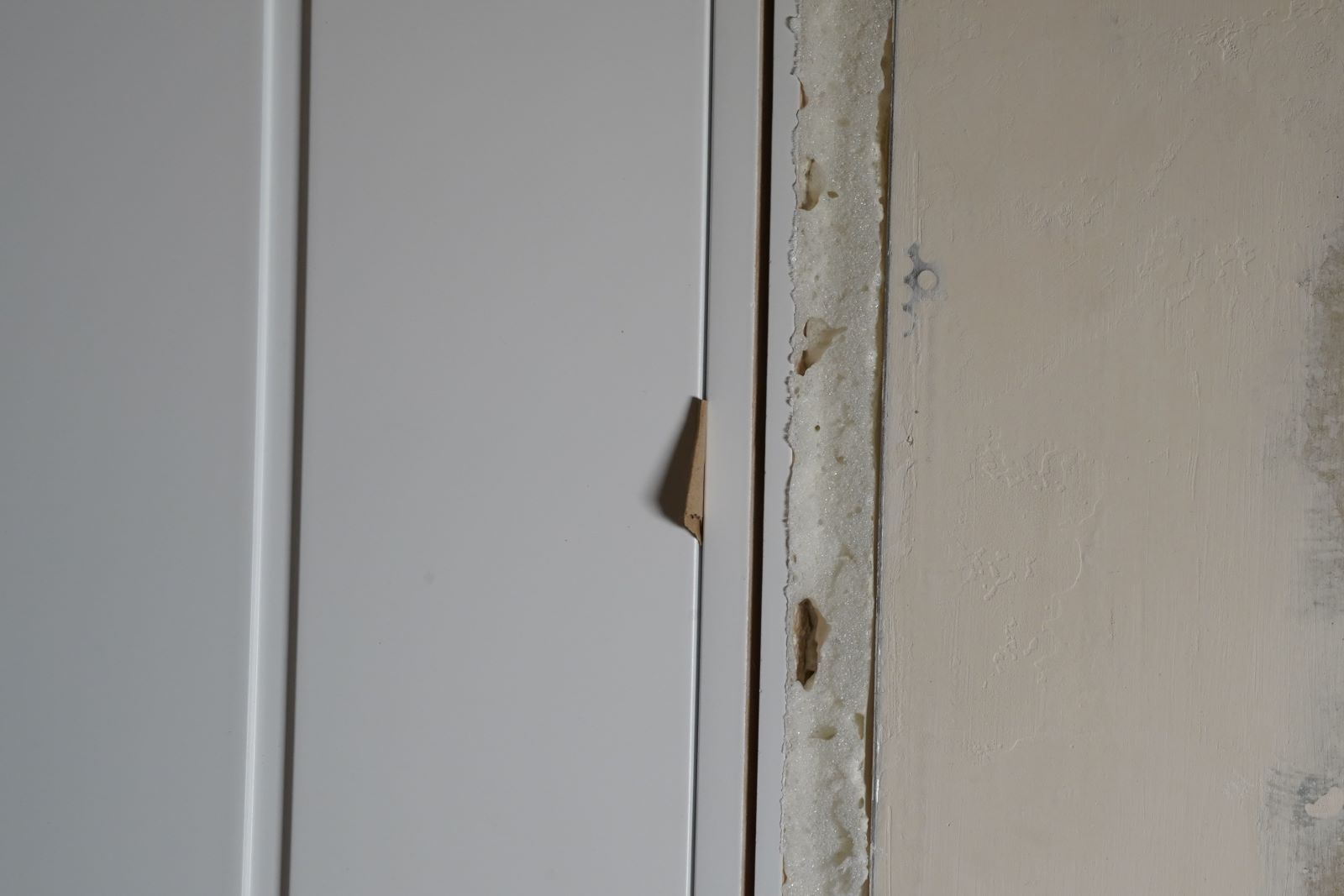
Spacers are inserted between the leaf and the frame so that they do not get pressed by the installation foam.
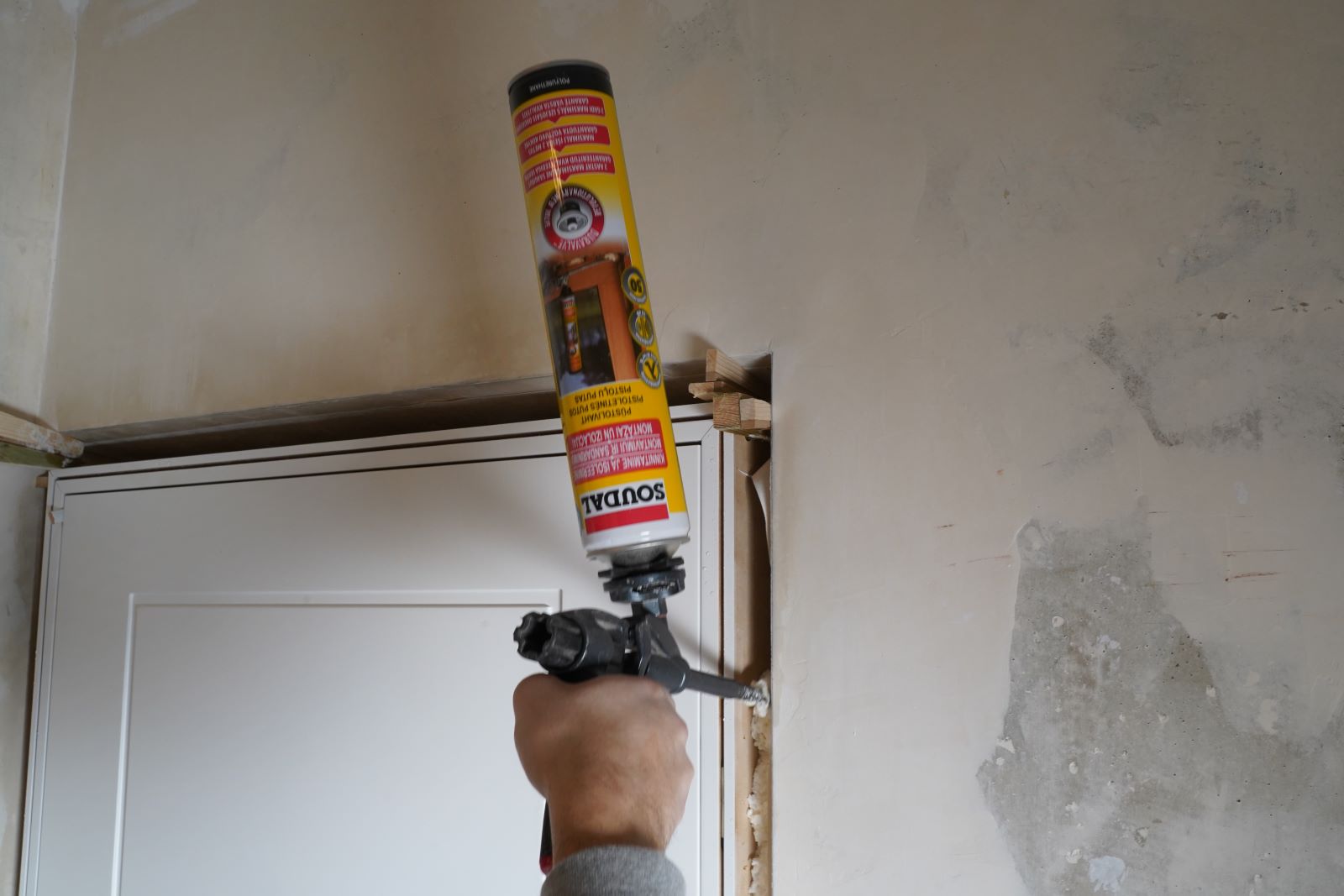
Screws are not used for fixing interior doors to walls. Good installation foam is sufficient. Before applying the foam, the surface of the opening is moistened with water. The foam is left to harden for about 90 minutes.
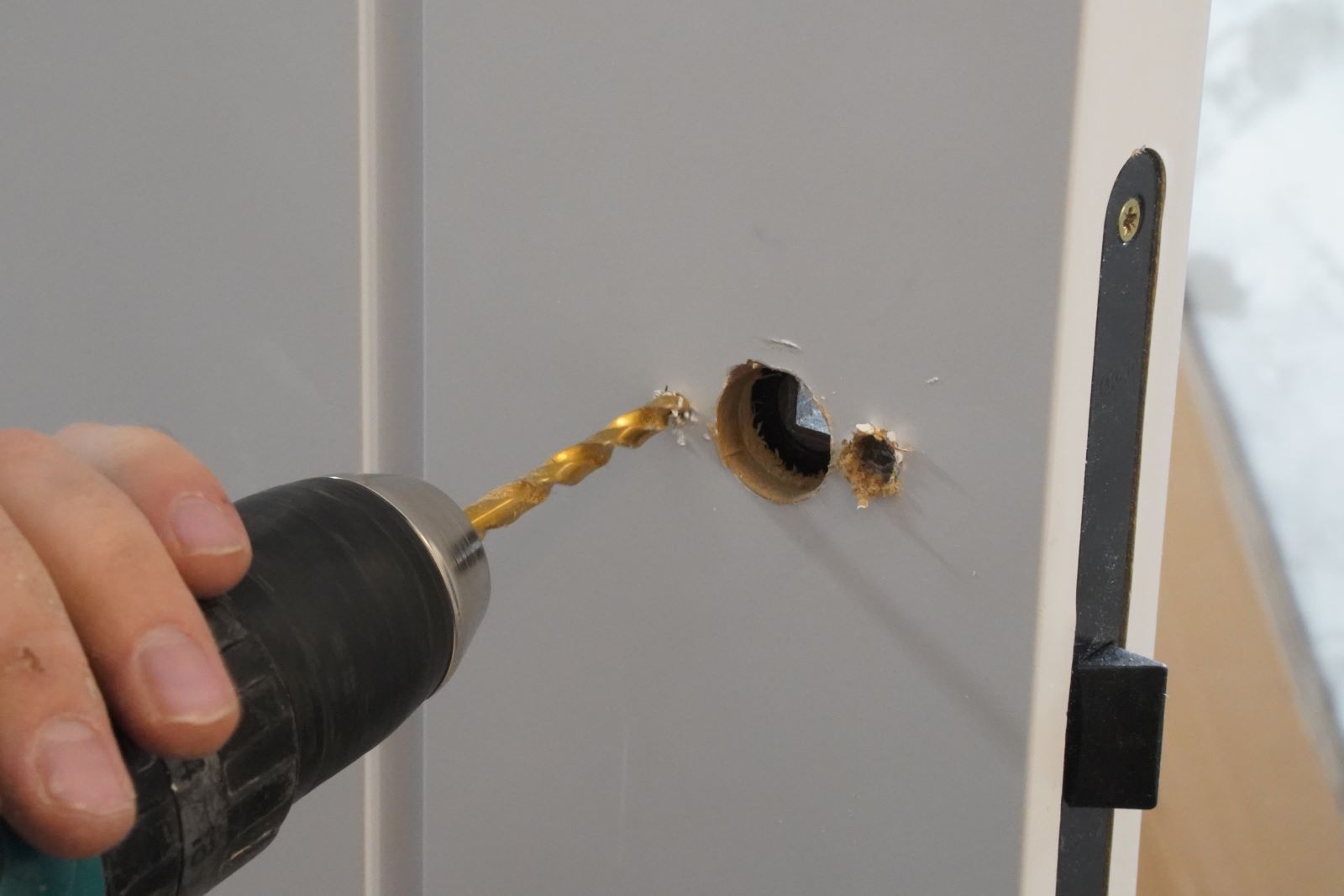
Locks and door handles are fixed differently. In this case, holes are drilled through the door leaf for tightening the handles together. Installing door handles is not complicated.
Interior door trim installation
Trim installation may cause some problems. The most difficult part is joining the horizontal and vertical trim. This may require wood cutting tools.
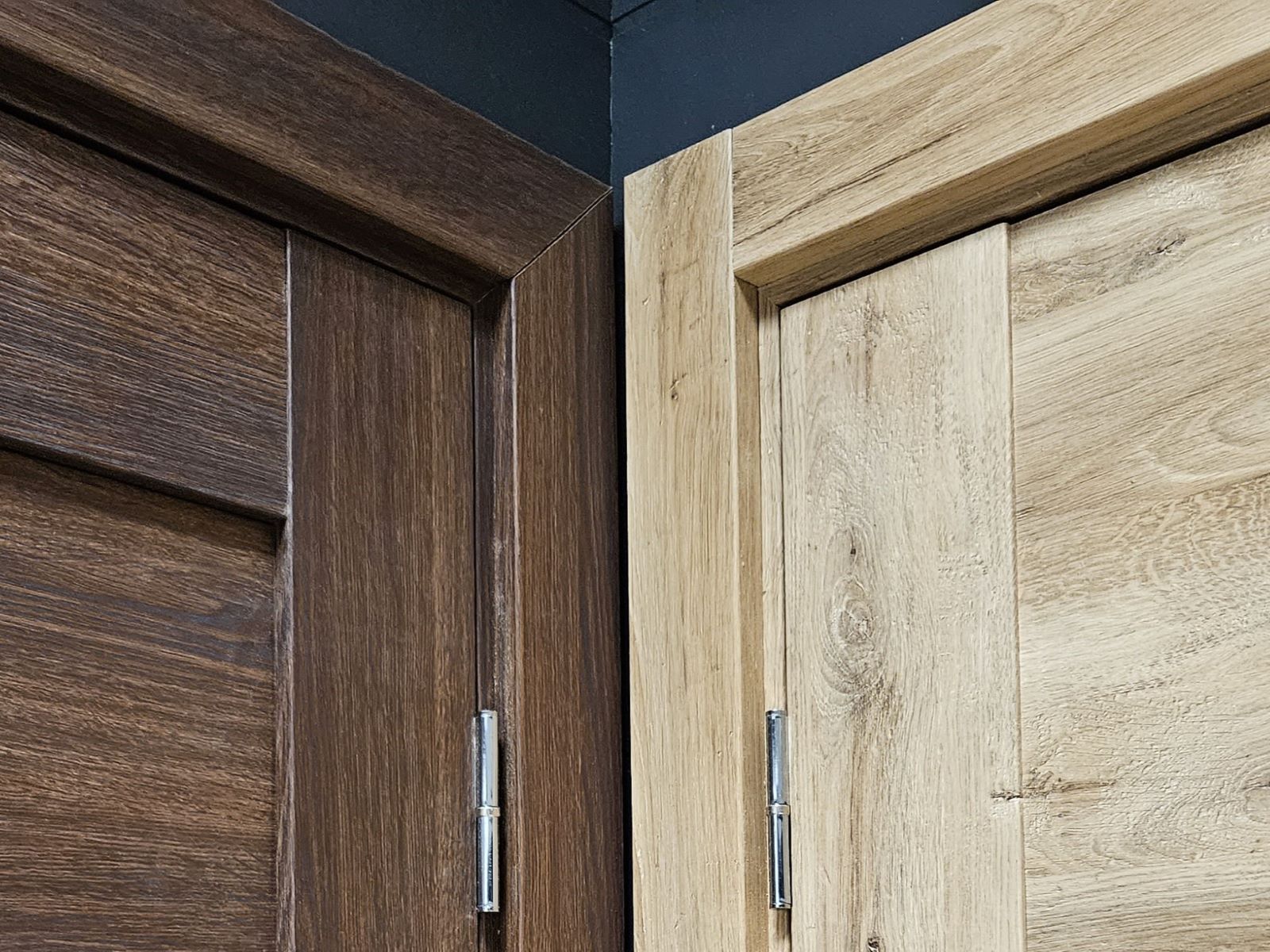
Door trims can be joined straight or diagonally.
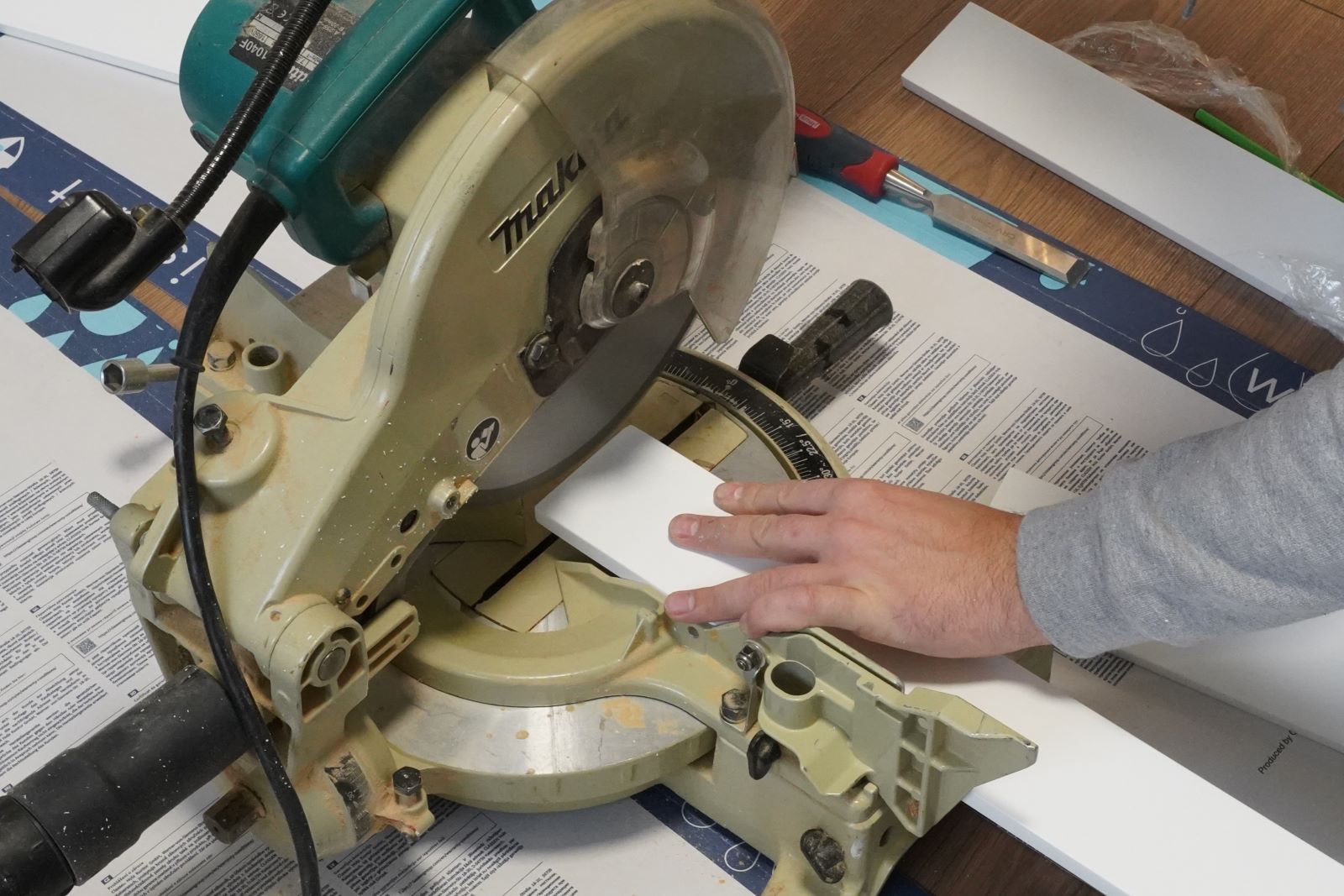
Interior door trim boards are cut with woodworking machines.
Adjustable interior door trims are inserted into a specially milled groove in the frame. The trims fit tightly against the wall, leaving no gap.
Interior door threshold
Solutions for the bottom of interior doors depend on the room. If ventilation in the apartment is arranged through several rooms, air circulation under the door is necessary. Usually, air is supplied to living rooms and extracted from the kitchen or sanitary rooms. Sealing the bottom of the door will disrupt air circulation.
However, a threshold allows improving sound insulation between rooms. This is especially important for the bedroom. In this case, interior doors should be considered during the design stage.
The threshold can be fixed (mounted to the floor) or mechanical. A mechanical threshold is milled into and installed in the bottom of the door leaf. When closing the door, the threshold lowers to the floor, and when opening, it automatically rises.
Interior door sound insulation
Many people carefully analyze the sound insulation properties of interior doors. However, in many cases, sound insulation properties are not important. What is the point of doors with good sound insulation if they are installed in a partition with poor sound insulation properties, which is usually a simple drywall partition.
It is possible to invest in acoustic drywall, then better sound insulation properties will be achieved. In this case, it is worth purchasing doors with better sound insulation properties. Better properties are usually determined by a denser filling of frame interior doors. The more massive the doors, the better the sound insulation will be. Sound insulation is also improved by doors made of materials with different densities.
For better sound insulation, the gap under the door should be closed. As mentioned, this can be done by installing a fixed or mechanical threshold.