
Contents
Watermelons (Citrullus lanatus) originate from Africa, and it is believed that their earliest ancestors grew in the desert regions of Southern Africa. They belong to the gourd family (Cucurbitaceae), which also includes pumpkins, cucumbers, and melons. Historical sources show that watermelons were already cultivated in ancient Egypt, and their seeds have been found in the tombs of pharaohs. Through the Mediterranean region, watermelons spread into Europe, and during the period of colonization, they were introduced to the Americas.
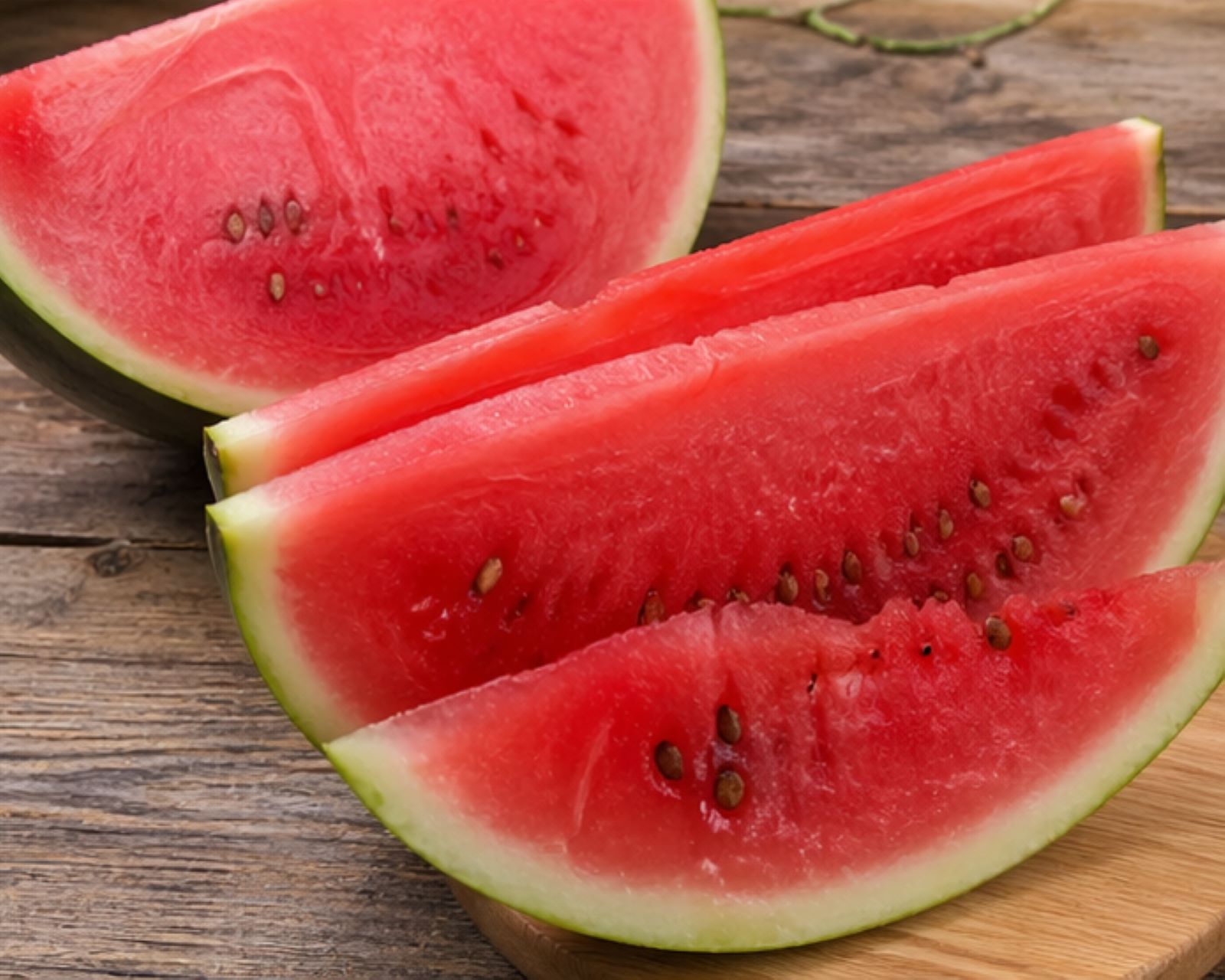
Watermelon Varieties
Watermelon varieties are classified according to several criteria, such as fruit size, shape, rind color, the presence or absence of seeds, and ripening time. The most popular types are ‘Crimson’ and ‘Sugar Baby’. Each of these types includes specific varieties with their own unique characteristics.
Crimson Type
‘Crimson’ type watermelons are among the most widespread in Europe. Their rind is light green with dark green stripes, while the flesh is bright red, juicy, and sweet. The fruits are usually round or slightly oval, weighing between 8 and 12 kg. This type is known for disease resistance and good productivity.
Sugar Baby Type
‘Sugar Baby’ type watermelons are more compact, which makes them ideal for smaller growing spaces. Their rind is dark green, almost black, while the flesh is intensely red, very sweet, and crisp. The fruits are round and weigh about 3–6 kg. These varieties are early, maturing in 65–75 days, and they are drought-tolerant and resistant to stressful conditions. Because of their small size and early ripening, ‘Sugar Baby’ watermelons are a popular choice among home gardeners.
When choosing a watermelon variety, it is important to consider the growing conditions, the desired harvest time, and the preferred fruit size in order to achieve the best results.
Syngenta is a global agricultural technology company that develops high-quality seeds to help farmers grow safe and nutritious food. Their assortment includes several watermelon varieties adapted to different growing conditions and needs.
Mirto Watermelons
The Mirto hybrid is characterized by a slightly darker rind that does not lose its color or fade. The fruits are flattened and very evenly rounded. This watermelon has a very high sugar content. The flesh is deep red, crisp, and sweet. The hybrid retains its crisp texture for a long time, making it suitable for longer storage when needed. It tolerates sunburn and has very good storage and transport capacity. The plants of this hybrid are vigorous, with well-developed roots, and because of the short growing period, it is suitable for early planting.
Growing period: 66 days.
Average fruit weight: 7–9 kg.
In addition to the above advantages, the Mirto F1 hybrid also has an excellent disease resistance package.
Disease resistance (IR):
Co: 1 – Colletotrichum orbiculare (cucumber anthracnose);
Px: 1 – powdery mildew caused by Podosphaera xanthii (cucumber powdery mildew).
Farao Watermelons. This is a hybrid watermelon of the “Crimson Sweet” type. The fruits are elongated, with an average weight of 10–15 kg. It is a medium-early variety with a growing period of 80 days. It is characterized by high yield and productivity. The fruits are uniform, with high external and internal quality. The rind is moderately thick and durable, with broad, moderately dark stripes. The flesh is aromatic, dark red, rich in sugar, and contains small brown seeds. It is also known for strong and continuous fruit setting and increased disease resistance.
Mirsini Watermelons. This is a medium-early hybrid with a growing period of 62–67 days. The fruits are oval and weigh 6–10 kg. They are resistant to strong sun and durable for long storage. The rind is dark green, and the flesh is dark red. The fruits have a maximum sugar content, which gives them a particularly distinctive flavor.
Romanza Watermelons. This is an early variety with a growing period of 60–68 days. The fruits are round and weigh 7–9 kg. The flesh is dark red and juicy. The rind is thin, with dark green stripes. The fruits are durable for long storage and highly suitable for transportation.
Karistan F1 belongs to the Crimson type varieties. It is a medium-early watermelon variety (70–80 days) distinguished by rapid growth and high productivity. The plant is vigorous and resistant to stress conditions. The fruits are elongated, weighing 9–12 kg, with dark red, sweet, and crisp flesh containing small seeds. The ripening period is 70–80 days. This variety is suitable for professional cultivation and has been tested in Lithuania.
Mirsini F1 belongs to the Crimson type varieties. It is medium-early (72–78 days), with high productivity and excellent flavor. The plant is strong and adapts well to different climatic conditions. The fruits are oval, weighing about 10–12 kg, with dark red, juicy, and sweet flesh. This variety has been tested in Lithuania and is recommended both for fresh consumption and processing.
Romanza F1 is also classified as a Crimson type variety. It is a medium-early variety with a ripening period of 75–80 days, distinguished by high productivity and excellent taste. The plant is strong, disease-resistant, and adapts well to various growing conditions. The fruits are round, weighing about 8–10 kg, with bright red, sweet, and crisp flesh. This variety has been tested in Lithuania and is suitable both for fresh consumption and for transportation because of its firm rind.
Arashan F1 also belongs to the Crimson type varieties. It is medium-early (72–78 days), with high productivity and excellent adaptation to different climatic conditions. The plant is strong and resistant to stress conditions. The fruits are oval, weighing about 10–12 kg, with dark red, juicy, and sweet flesh. This variety has been tested in Lithuania and is recommended both for fresh consumption and processing.
Topgun F1 belongs to the Sugar Baby type varieties. It is an early variety with a ripening period of 68–72 days, distinguished by fast growth and high yield. The plant is strong and adapts well to different growing conditions. The fruits are round, weighing about 8–10 kg, with bright red, sweet, and crisp flesh. This variety has been tested in Lithuania and is suitable both for fresh consumption and transportation because of its firm rind.
Morena F1 belongs to the seedless varieties. It is characterized by medium-early maturity (72–78 days) and excellent taste. The plant is strong and adapts well to different climatic conditions. The fruits are round, weighing about 6–8 kg, with dark red, juicy, and sweet flesh. Because of its seedless fruits, this variety is especially valued by consumers.
Lorian F1 belongs to the Sugar Baby type varieties. It is a medium-early variety with a ripening period of 70–75 days, distinguished by compact growth and high productivity. The plant adapts well to different growing conditions and is suitable for growing both outdoors and in greenhouses. The fruits are round, weighing about 5–7 kg, with bright red, sweet, and juicy flesh. This variety is recommended for fresh consumption.
Roman F1 belongs to the Crimson type varieties. It is medium-early (72–78 days), characterized by strong growth and high productivity. The plant is disease-resistant and adapts well to different climatic conditions. The fruits are oval, weighing about 9–11 kg, with dark red, sweet, and crisp flesh. This variety is suitable both for fresh consumption and processing.
Sorento F1 belongs to the Sugar Baby type varieties. It is an early variety with a ripening period of 68–72 days, distinguished by fast growth and high productivity. The plant is strong and adapts well to different growing conditions. The fruits are round, weighing about 7–9 kg, with bright red, sweet, and juicy flesh. This variety is recommended for fresh consumption and is suitable for transportation because of its firm rind.
Carnivor F1 belongs to the seedless varieties. It is medium-early (72–78 days), distinguished by high productivity and excellent flavor. The plant is strong and adapts well to different climatic conditions. The fruits are round, weighing about 6–8 kg, with dark red, juicy, and sweet flesh.
Best Location for Growing Watermelons
Watermelons are plants that love light and warmth. They need at least 8–10 hours of sunlight per day, so the best place for planting is a sunny site protected from northern winds. Because they are sensitive to frost and sudden temperature changes, it is important to choose a sheltered location or use protective barriers.
It is best to plant them on the southern or southwestern side of the plot, where sunlight reaches the plants all day long. If you are growing watermelons in open fields, it is worth using agricultural film or planting them among taller plants that can protect them from wind without blocking the sun.
Soil for Growing Watermelons
Watermelons grow best in fertile, light, and well-drained soil. The optimal soil pH is between 6.0 and 7.0. The soil should be enriched with humus, with a recommended content of 3–4%. It is also important to ensure sufficient amounts of nitrogen (N), phosphorus (P), and potassium (K), with an optimal NPK ratio of: N – 80–100 kg/ha, P – 50–70 kg/ha, K – 150–180 kg/ha.
Among micronutrients, boron (B), magnesium (Mg), calcium (Ca), and zinc (Zn) are especially important, as they promote fruit formation and growth. Before planting, the soil should be prepared by digging it over in autumn and fertilizing it with manure or compost, then loosening and leveling it in spring.
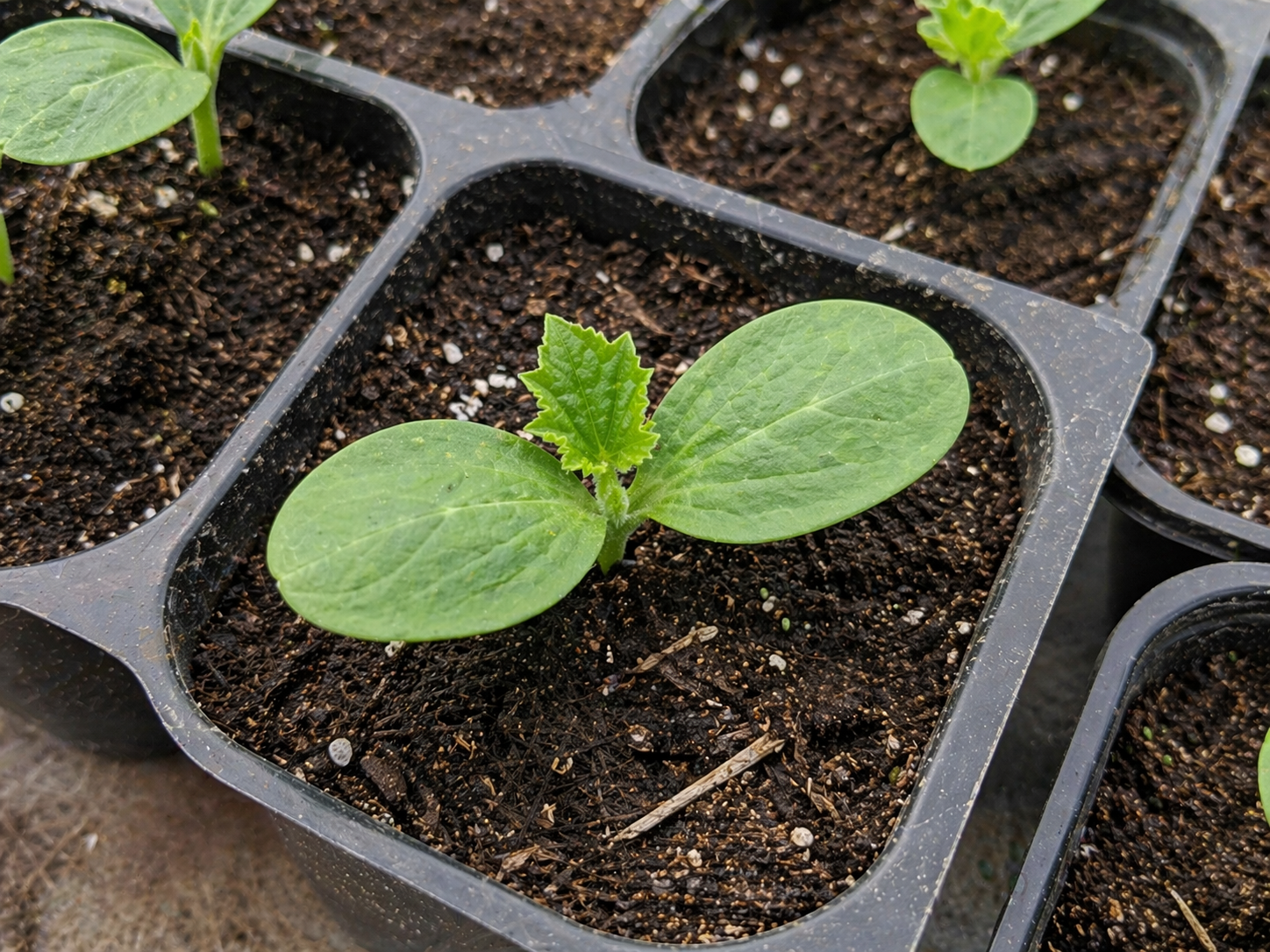
Germinating Watermelon Seeds
The planting time for watermelons depends on climate conditions. In Lithuania, seedlings are best transplanted into open ground at the end of May or the beginning of June, when the soil temperature reaches at least +15 °C.
The most suitable time for germination is mid-April. Seeds are sown in trays filled with loose, nutrient-rich substrate with a pH of around 6.5–7.0. The optimal temperature during germination is +25–28 °C during the day and no lower than +18 °C at night. Seedlings should receive enough light, at least 12–14 hours per day. If natural light is insufficient, additional LED lighting is used.
Planting Watermelons Outdoors
Transplanting into open ground is done according to the phenological calendar, with the ideal time being when cherry trees or apple trees begin to bloom. It is important that spring frosts have passed and that nighttime temperatures do not fall below +10 °C. Depending on weather conditions, seedlings can be covered with agricultural fleece during the first weeks. Soil temperature should not be lower than +15 to +18 °C. Many watermelon growers recommend delaying planting outdoors until there is no real risk of frost. For example, in 2024 the last frosts occurred at the end of May. For this reason, some growers plant watermelons as late as late June.
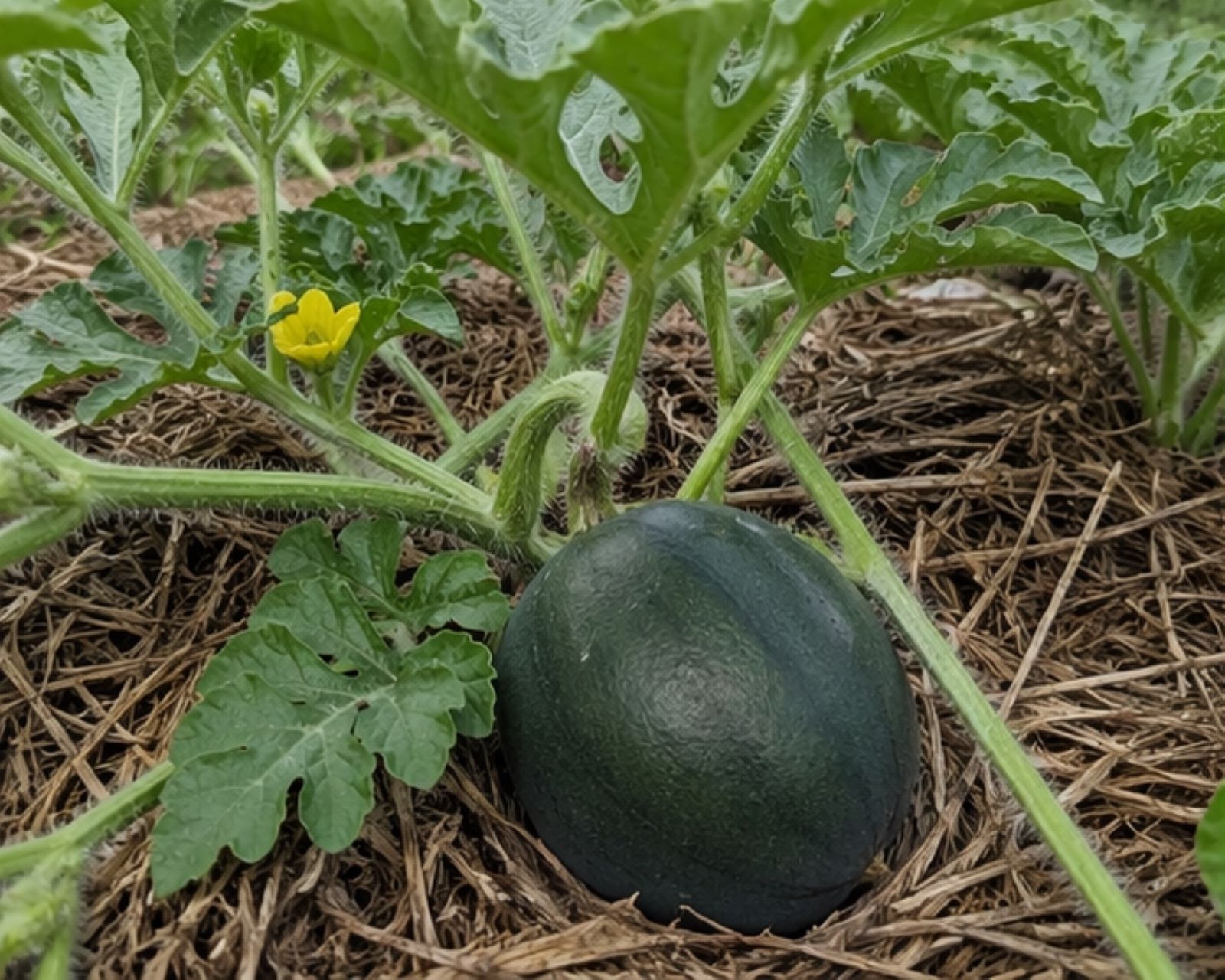
One advantage of late planting is the possibility of incorporating green manure crops, destroying weed seedlings, and reducing the weed seed bank in the soil.
Watermelons Spacing
The spacing between seedlings depends on the variety and the growing method. On average, 70–100 cm is left between plants, and 1.5–2 m between rows, so that the plants have enough room to spread.
Watermelon Care
To ensure larger fruits, it is recommended to remove excess flowers, leaving 3–4 fruits on one plant. This allows the plant to direct more nutrients to the remaining fruits.
Watermelons should be watered moderately. In waterlogged soil, they may rot, especially at the seedling stage. Watering should be done only with warm water, close to the ground.
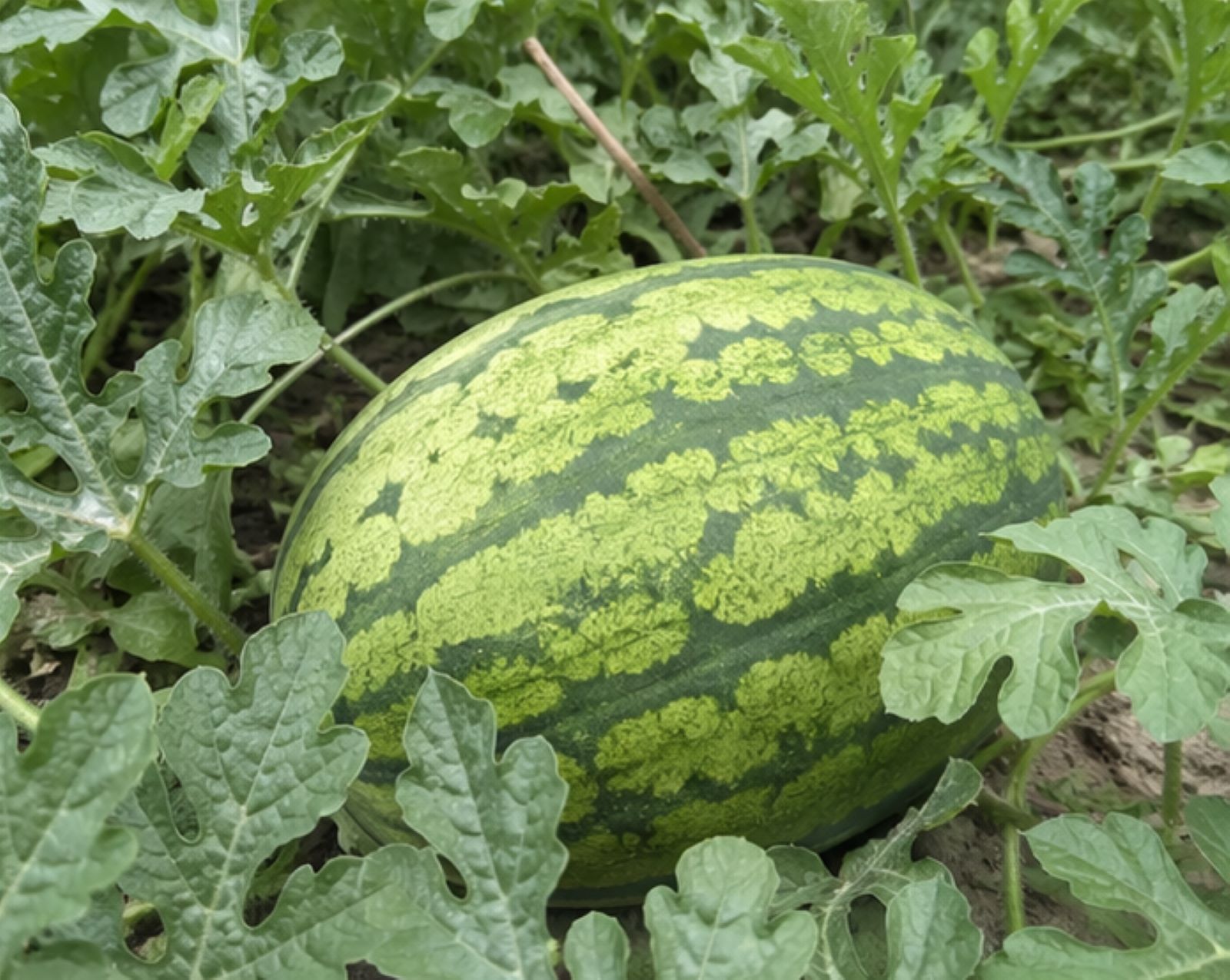
Fertilizing Watermelons
Fertilization is carried out in several stages. The first time is after the seedlings have established, using nitrogen fertilizers to promote growth. The second time is during flowering, using phosphorus and potassium fertilizers. The third time is during fruit formation, supplementing the soil with calcium and magnesium.
Fertilizing should be done every 2–3 weeks, while avoiding excessive nitrogen, which encourages leaf growth but reduces fruit quality.
Watermelon Pests and Diseases
The main pests of watermelons are aphids, spider mites, and thrips, while the most common diseases are powdery mildew, anthracnose, fusarium wilt, and bacterial wilt.
Prevention involves ensuring proper plant spacing, good air circulation, and regulated watering so that excessive moisture does not build up.
Pest control includes using biological products such as neem oil or natural predators of spider mites.
Disease control includes spraying plants with fungicides against powdery mildew and other fungal infections. Early disease diagnosis makes it possible to manage the spread effectively.