
Contents
Untreated domestic wastewater enters the soil and groundwater, carrying phosphorus, nitrogen compounds (especially nitrates), organic matter, surfactants, and microorganisms. These substances break down slowly, accumulate in the soil, and eventually reach aquifers.
The most serious issue is groundwater contamination. Unlike surface water bodies, groundwater recovers very slowly, making pollution long-lasting. This directly affects the quality of well water and can eventually become a problem for drinking water.
Wastewater Treatment Systems
For this reason, outdoor toilets are increasingly restricted or phased out in regulated areas. Problems are also increasing with traditional septic tanks, as they typically provide only primary treatment and may not meet modern environmental standards without additional treatment. Therefore, there is a transition toward biological wastewater treatment systems, which allow treated water to be discharged in compliance with regulations.
Financial Support for Installation
The installation of wastewater treatment systems in many regions may be partially supported to reduce the environmental impact of individual households in areas without centralized sewer networks. Funding mechanisms vary significantly depending on the country and local authorities.
Support may cover part of eligible costs, often ranging from a few thousand pounds in the UK or several thousand dollars in the USA, depending on the program and location. Equipment, installation, and in some cases design costs may be eligible. Funding is usually granted only where connection to centralized networks is not possible.
The system must comply with recognized standards such as EN 12566 (UK/Europe) or NSF/ANSI wastewater standards (USA), meaning it must be certified and tested. In addition, local permits and environmental regulations must be met. Applications can typically be submitted by property owners, and installation must comply with technical and environmental requirements. Support is usually linked to the system’s ability to achieve required treatment parameters.
Additionally, some municipalities apply their own compensation schemes. They may cover part of the costs or provide a fixed amount. In some cases, compensation is granted after installation upon submission of expense documentation.
Before starting work, it is necessary to check the specific conditions of the funding program, as the order of application and installation may vary depending on the funding source.
Choosing a Treatment System
A biological wastewater treatment system is selected based on daily wastewater volume. Approximately 150 liters (40 gallons) per person per day is typically used for calculation, so a household of five produces about 0.75 m³ (200 gallons). According to standard practice, a system with a capacity of at least 0.8 m³ per day would be installed.
When evaluating a system, specific parameters are more important than a general “treatment percentage,” because these indicators are actually monitored. If they are not achieved, the system may not be approved for operation or may not qualify for regulatory compliance or funding.
Parameter | Explanation | Typical Standard |
BOD₅ | Organic matter content | ≤ 25 mg/l |
Suspended solids | Solid particles | ≤ 35 mg/l |
Total nitrogen (N) | Nitrogen compounds | ≤ 25 mg/l* |
Total phosphorus (P) | Phosphorus compounds | ≤ 5 mg/l* |
*Depending on local requirements and whether nutrient removal is required.
Inside the system, three zones are typically formed: primary settling, aeration, and secondary settling. In the first, larger particles settle. In the aeration zone, biological treatment occurs, where aerobic bacteria require oxygen. The blower supplies air and maintains the process; if it stops working, treatment efficiency is significantly reduced. Incorrect airflow worsens settling and increases suspended solids levels. In the secondary settling zone, sludge is separated from treated water.
Treatment System
Modern wastewater treatment systems are designed to meet strict environmental standards, including those required in regions such as Northern Europe and North America.
The blower is often installed separately to ensure quieter and more reliable operation. Some systems integrate the blower within the unit while maintaining acceptable noise levels.
System Design
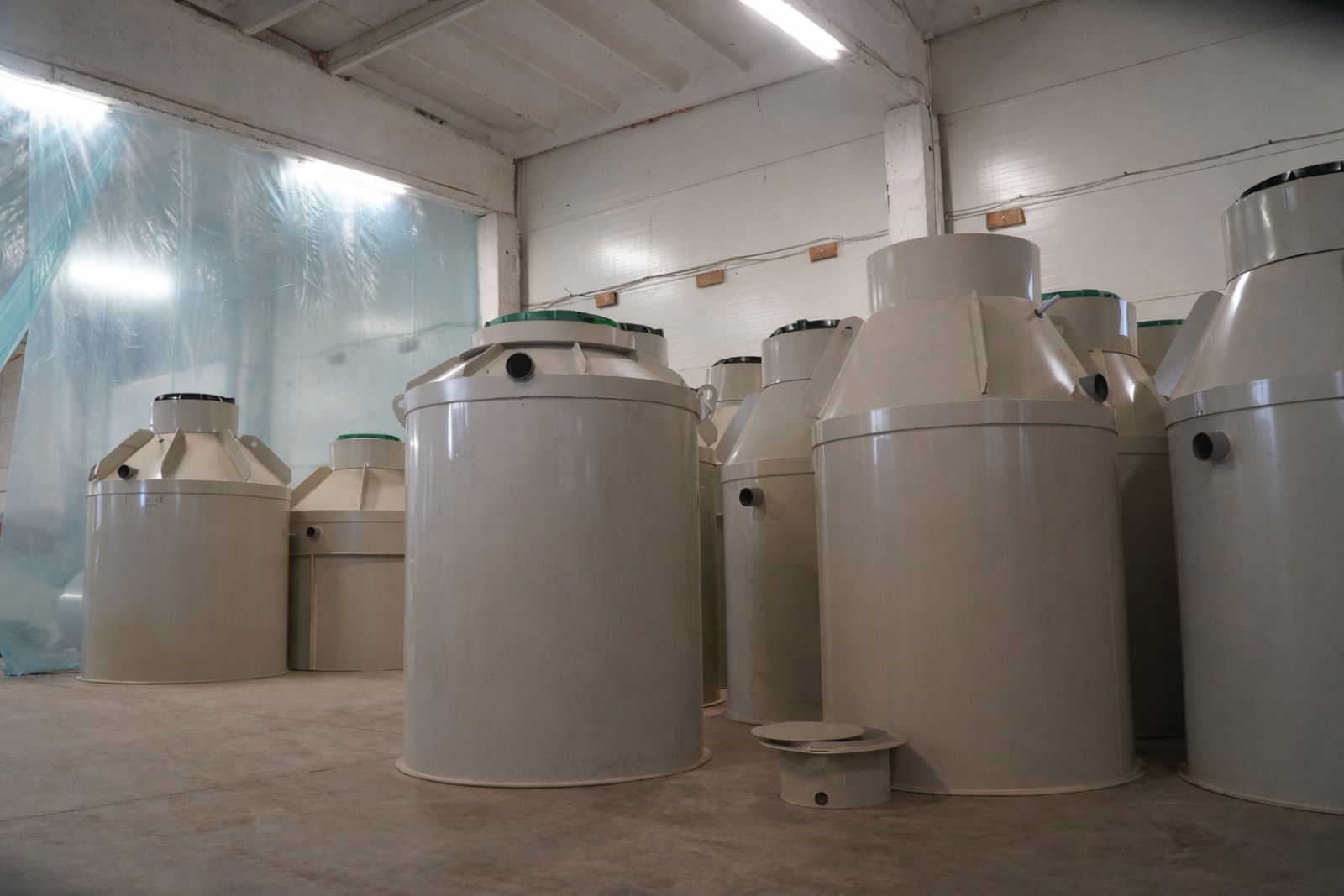
Both high-cone and low-cone systems are used. Traditional high-cone systems are intended for deeper inlet pipes. Low-cone systems allow installation with shallow pipes (around 40 cm / 16 inches depth) and are suitable for areas with high groundwater levels. These systems reduce excavation work and may eliminate the need for a concrete base. They also simplify the discharge of treated water.
Materials and Construction
The system body is typically made of plastic. It is important that materials are certified and suitable for structural use. High-quality systems are reinforced to withstand soil pressure and external loads (e.g., vehicles). Structural reliability depends on proper manufacturing methods and material quality.
Installation
The trench is excavated with an appropriate slope. The distance from the house can be significant but is limited by pipe depth. For example, over a distance of 100 meters (330 feet), the pipe may deepen by about 1–2 meters (3–6.5 feet), making proper planning important.
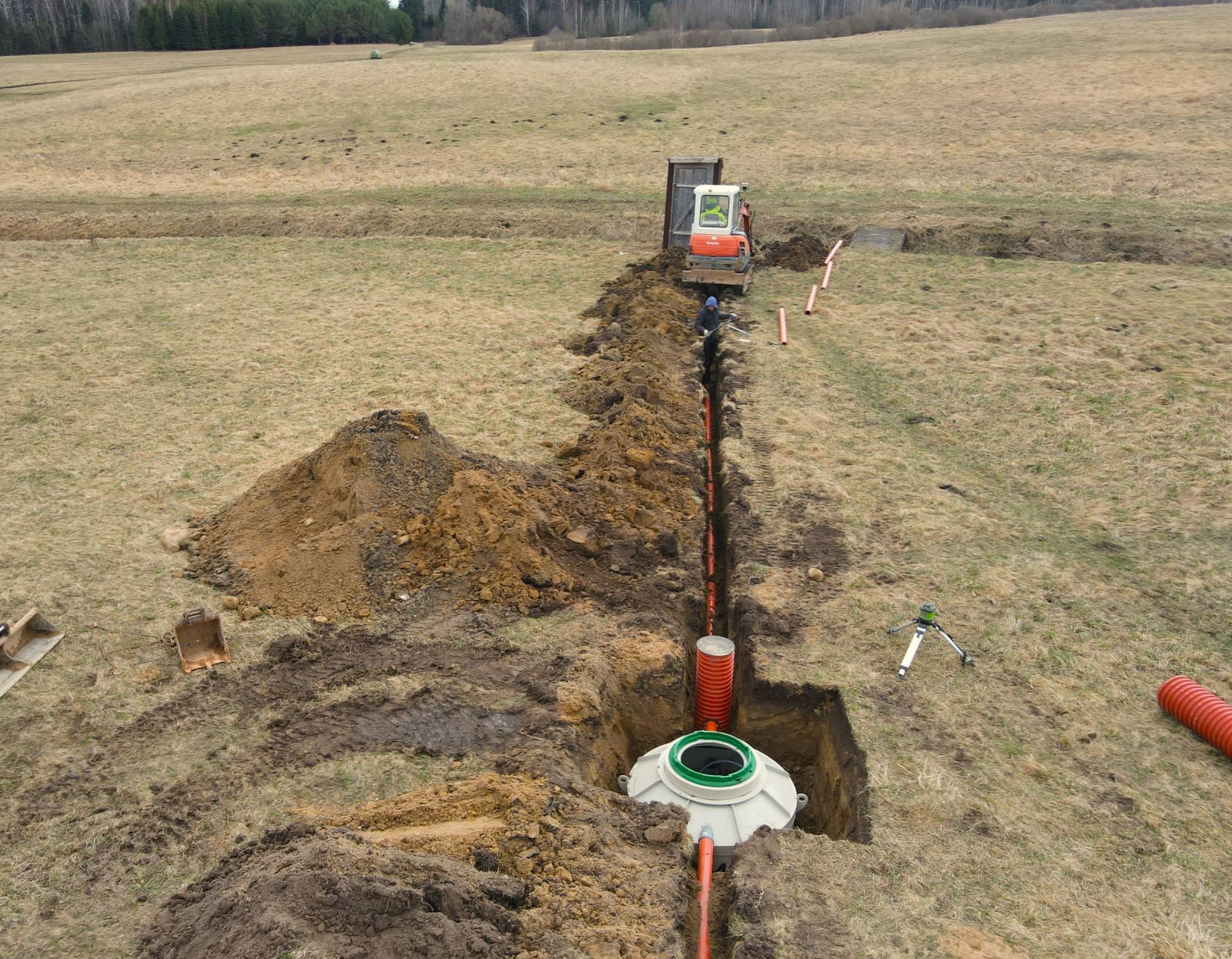
Inspection points are typically installed at regular intervals (e.g., every 30–40 m / 100–130 ft) in straight sections, depending on local requirements. At bends, inspection needs depend on the angle and regulations.
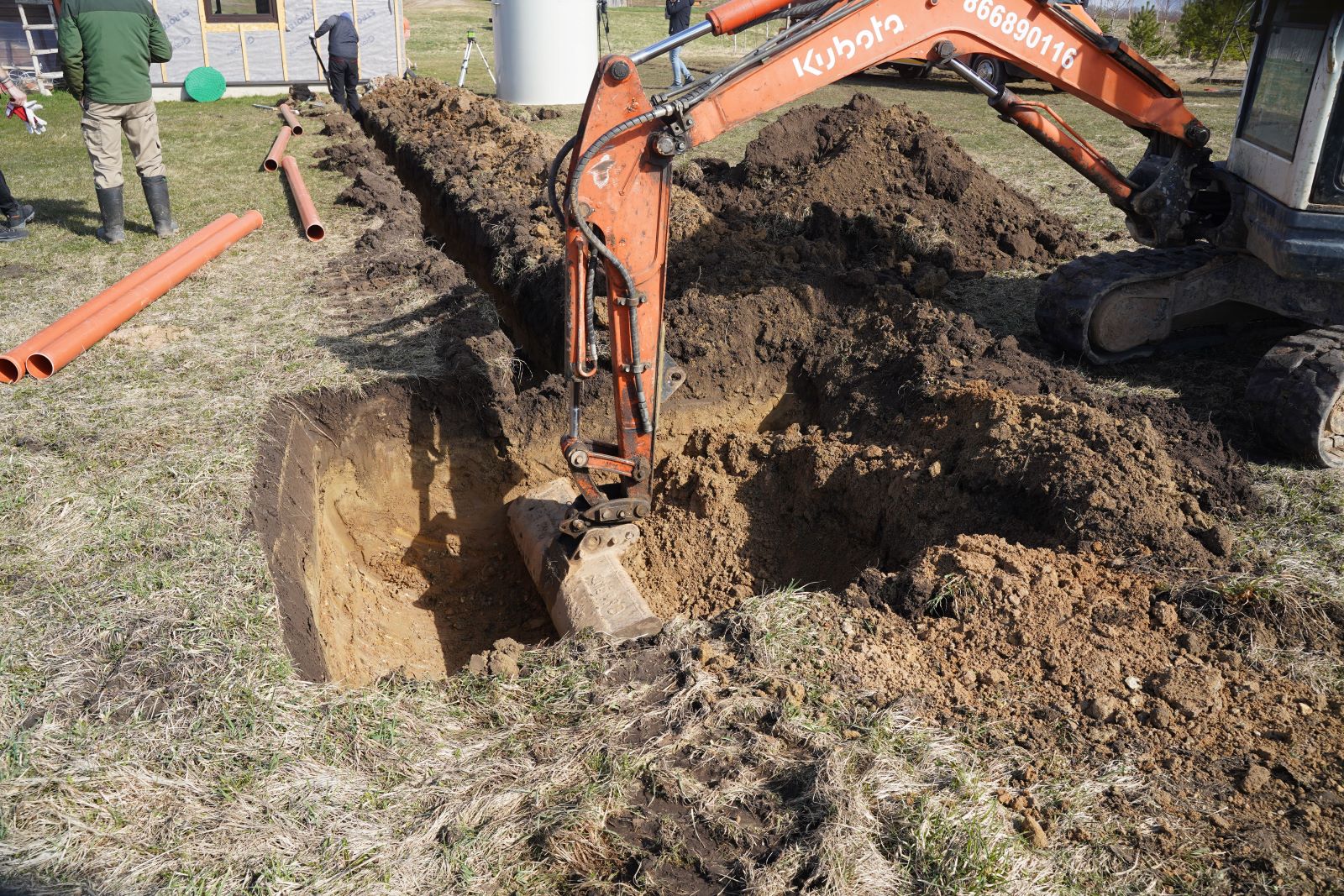
The sewer pipe from the house is installed at a minimum depth of about 40 cm (16 inches) with a slope of approximately 1–2% (about 0.5 inches per foot). This ensures both water and solids move together; too steep a slope can cause water to flow faster than solids.
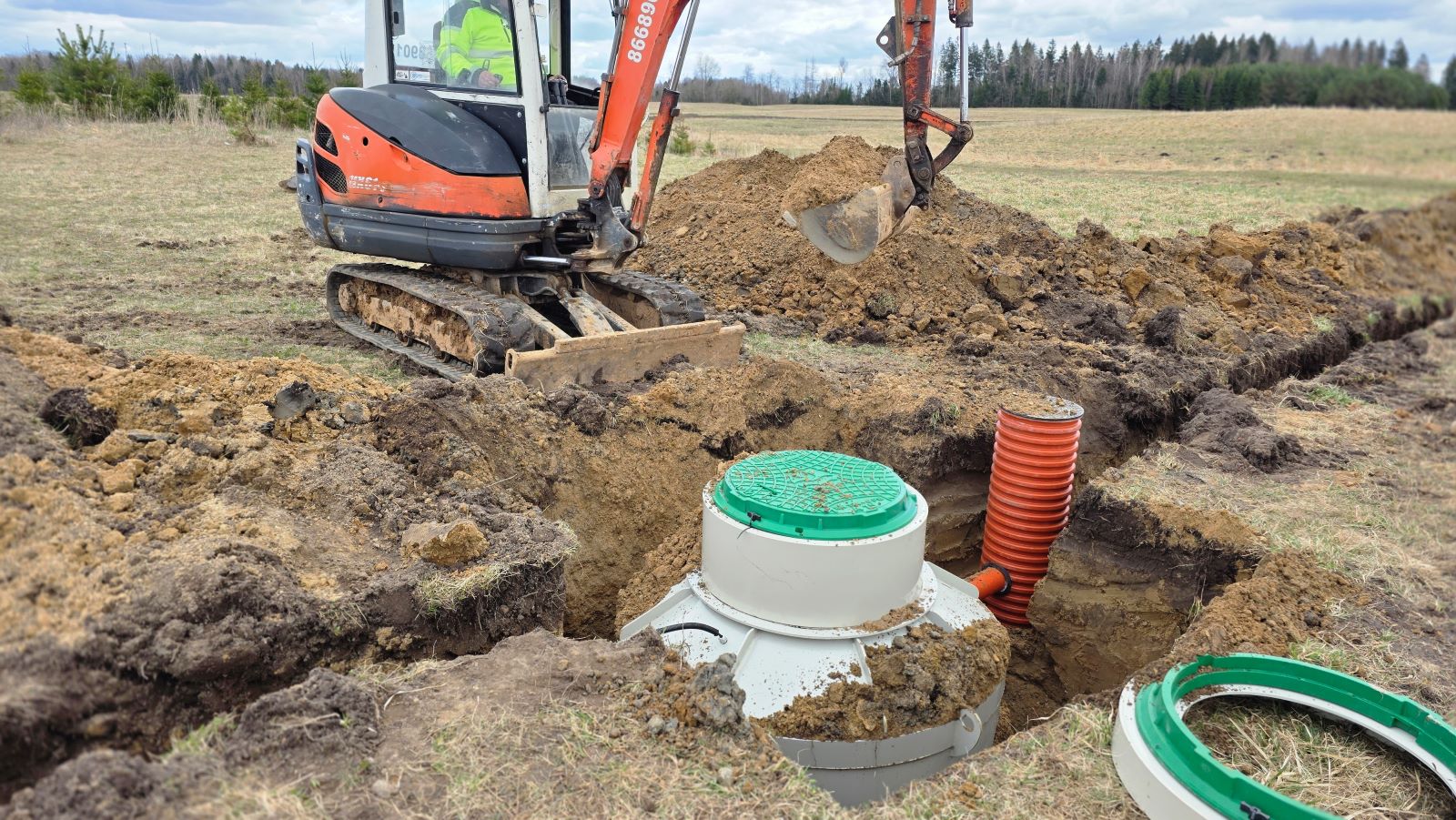
The installation base is leveled and compacted. In areas with high groundwater, a concrete base may be required to prevent the system from floating. The system is filled with water before backfilling to prevent deformation.
Disposal of Treated Water
Treated water may be discharged either into the ground (infiltration) or into the environment, depending on site conditions and regulations.
A common method is infiltration through a well or drainage field, where water percolates into the soil. A gravel layer increases the infiltration area.
Where permitted, water may be discharged into a drainage ditch, stormwater system, or water body, provided treatment standards are met and approvals are obtained.
If groundwater levels are high or discharge elevation is above the system, a pump may be required, increasing costs and maintenance.
Cost of Installation
Advertisements often claim installation costs of around £3,000–£4,000 in the UK or $4,000–$6,000 in the USA, but this usually includes only the system and basic installation. Additional costs for piping, infiltration, and earthworks are often not included.
Total cost typically ranges from approximately £6,000–£15,000 in the UK or $8,000–$20,000 in the USA, depending on site conditions and system requirements.
Startup
The system is connected to electricity and requires an active biological process. A bacterial colony develops naturally over time or may be introduced using activated sludge.
Without an established bacterial population, the system cannot operate at full efficiency. Natural development may take several weeks, while seeding allows faster startup.
Maintenance
Sludge must be periodically removed, as it accumulates and reduces system efficiency. Water quality may be monitored where required.
Inspection and maintenance requirements vary depending on local regulations and system type. Systems installed with funding may have additional obligations.
The blower is critical and must be maintained. A common issue is a clogged air filter, which reduces airflow and may cause overheating. It should be checked and cleaned periodically (e.g., every 6 months).
Non-degradable materials must not be disposed of in the system. Wet wipes can cause blockages, chlorine-based chemicals can harm bacteria, and grease can disrupt the biological process.
A common myth is that systems must be restarted with additives after downtime. In reality, microorganisms decrease but do not disappear entirely, and the system typically resumes normal operation once wastewater flow returns, although full efficiency may take some time to recover.